

A journey through the biodiversity of the Peradeniya Botanical Garden
Just 6 km from Kandy lies the Peradeniya Botanical Garden, a natural gem spread over 59 hectares and home to more than 4,000 species of plants and trees from around the world. It is not only the largest botanical garden in Sri Lanka but also one of the most visited and beloved destinations in the country. Although Sri Lanka has numerous public and private gardens, Peradeniya stands out as a must-see on any trip to the island.
History and Location
The gardens were originally created as a simple vegetable garden during the British colonial period, but gradually transformed into an internationally renowned botanical garden. They are strategically located on a peninsula formed by a bend in the Mahaweli River, creating a particularly picturesque and serene setting.
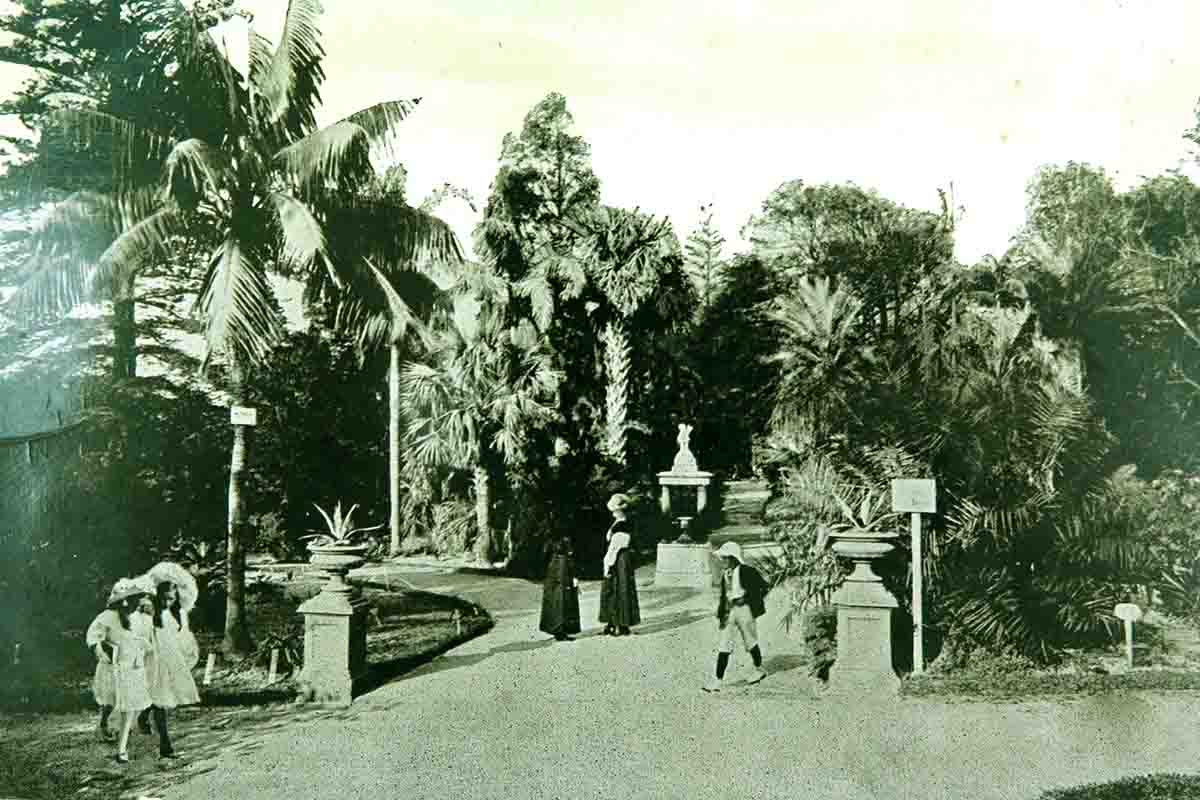
During its early stages, the garden’s workers focused on scientific tasks, particularly the introduction and acclimatization of useful and ornamental plants. At one point, attempts were also made to develop an economic activity, cultivating coffee and cinnamon within the garden. A notable chapter in its history occurred during World War II, when Lord Louis Mountbatten, Supreme Commander of the Allied Forces in South Asia, used the garden as the headquarters of the Southeast Asia Command. The building from which he planned the Allied strategy in Asia remains in perfect condition.
A Privileged Location for Biodiversity
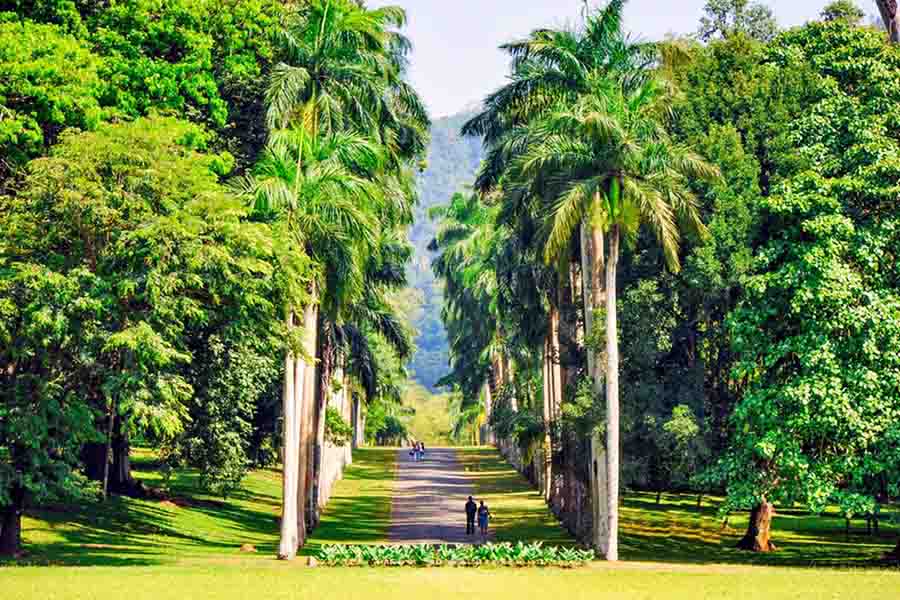
The Peradeniya Botanical Garden enjoys an ideal location for cultivating a wide variety of species. Situated at 500 meters above sea level, its unique climate is a blend of Mediterranean characteristics with the humidity typical of Kandy – together with the presence of the Mahaweli River, create exceptional conditions that allow all plants and trees to thrive and develop in a spectacular manner.
Featured Collections
- The garden houses several specialized collections that attract both experts and casual visitors:
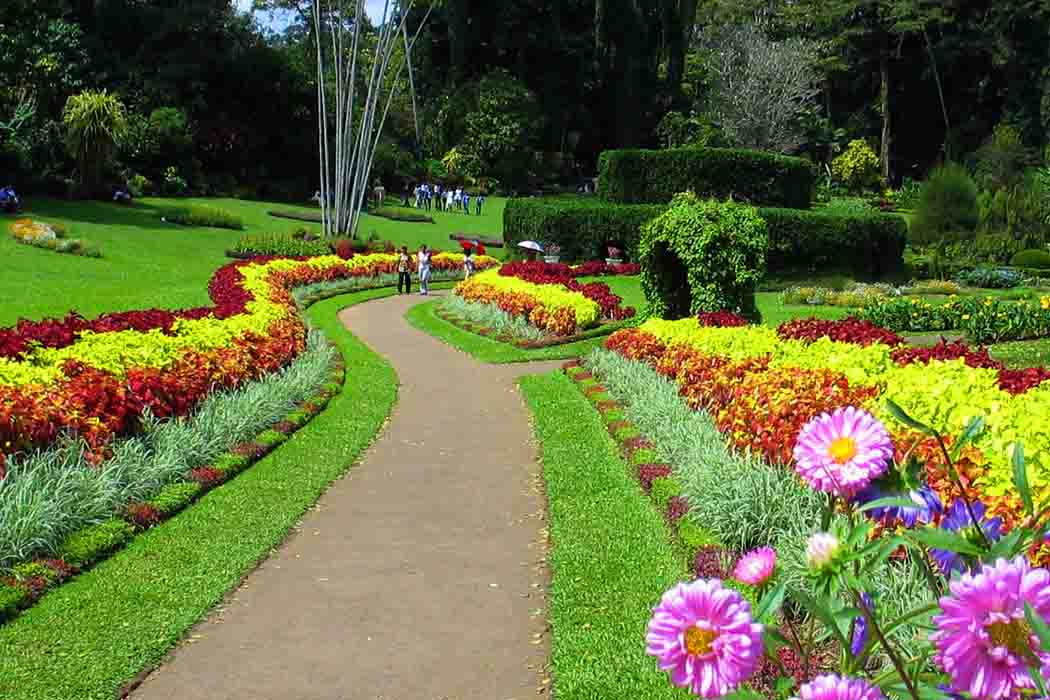
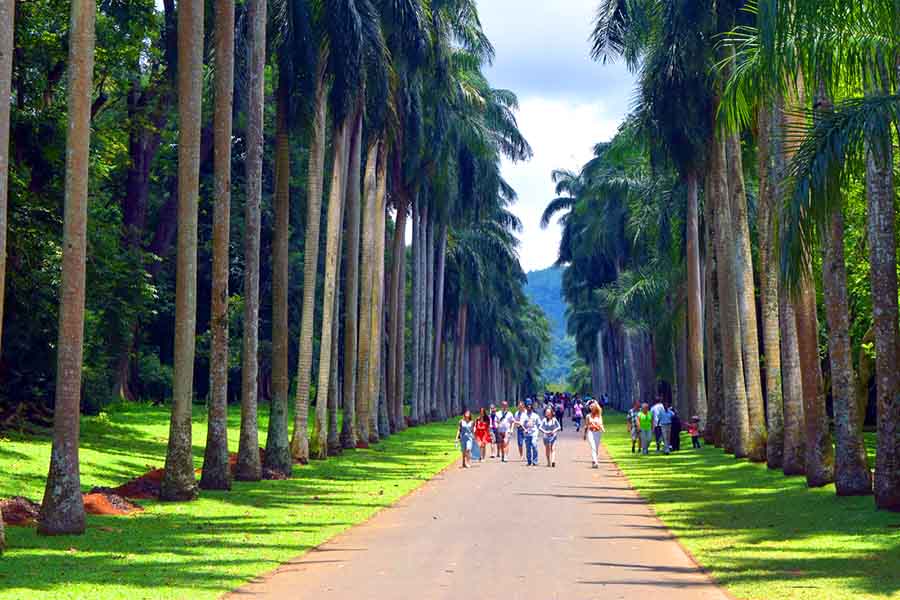
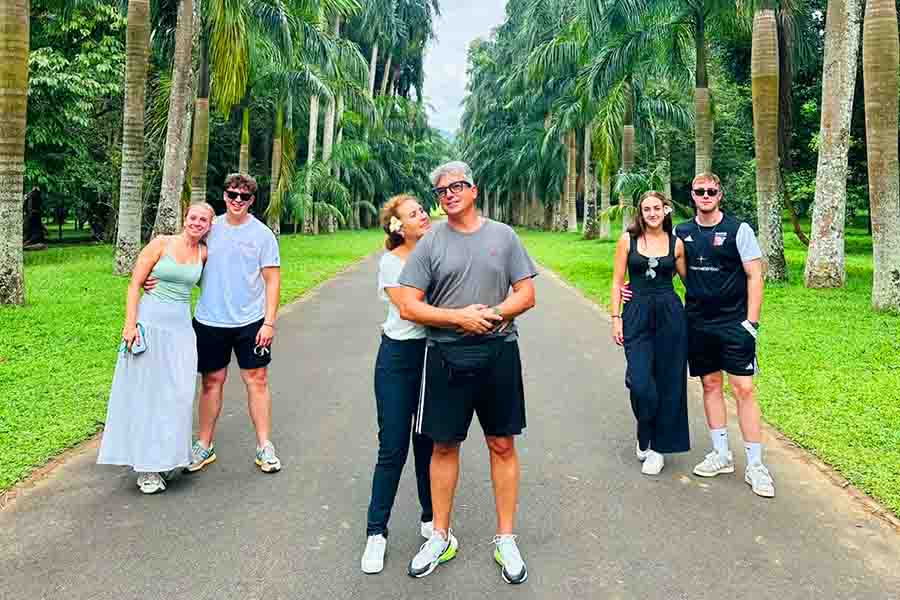
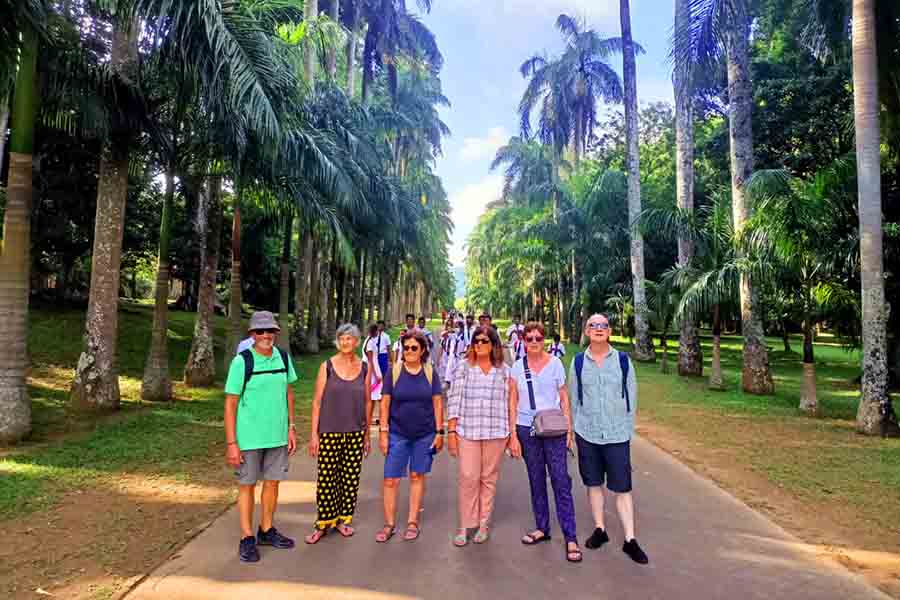
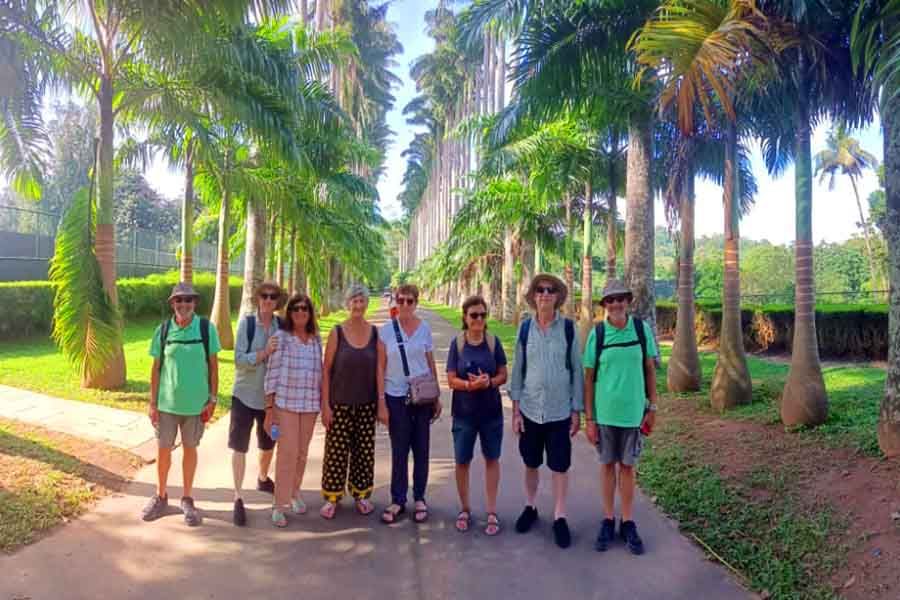
- Palms: The collection forms spectacular avenues that create a dreamlike atmosphere as you stroll through the garden.
- Orchid House: With more than 300 varieties of orchids, including Cattleya, Dendrobium, Arachnis, Oncidium, and Phalaenopsis, it is one of the most admired spaces.
- Gymnosperms, bamboo, cacti, and ferns: Each collection is carefully cultivated and labeled to educate visitors.
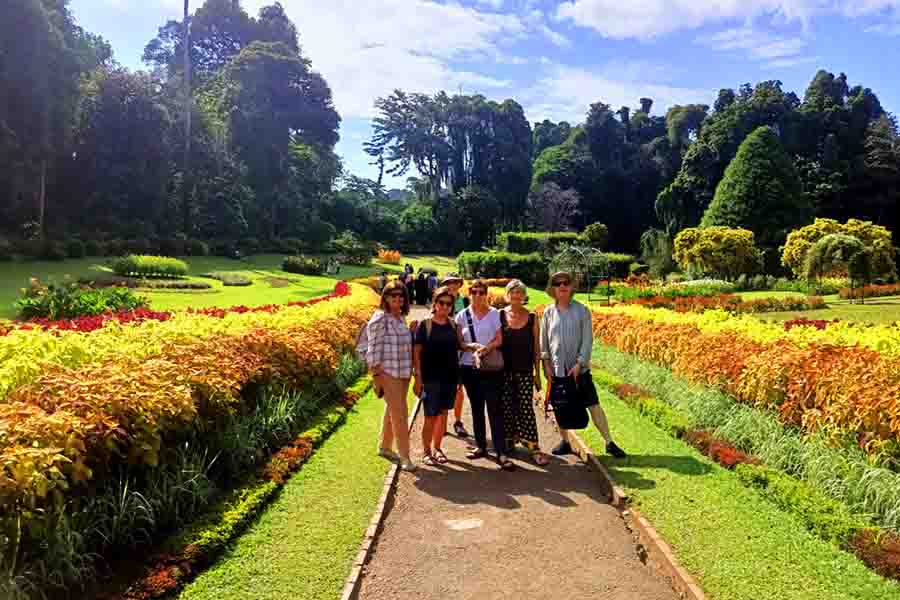
- Flower Garden and Spice Garden: Spaces dedicated to floral beauty and aromatic plants.
Memorial Trees: A Walk Through History
One of the garden's most fascinating areas is the so-called "Memorial Trees," where since 1900, prominent figures from around the world have planted trees as a symbol of peace and brotherhood. Among those who have left their mark are Queen Elizabeth II of England, cosmonaut Yuri Gagarin, King George V and Edward VIII of England, and even the revolutionary Che Guevara. A living testament to historic encounters and international diplomacy.
Curious and Notable Species
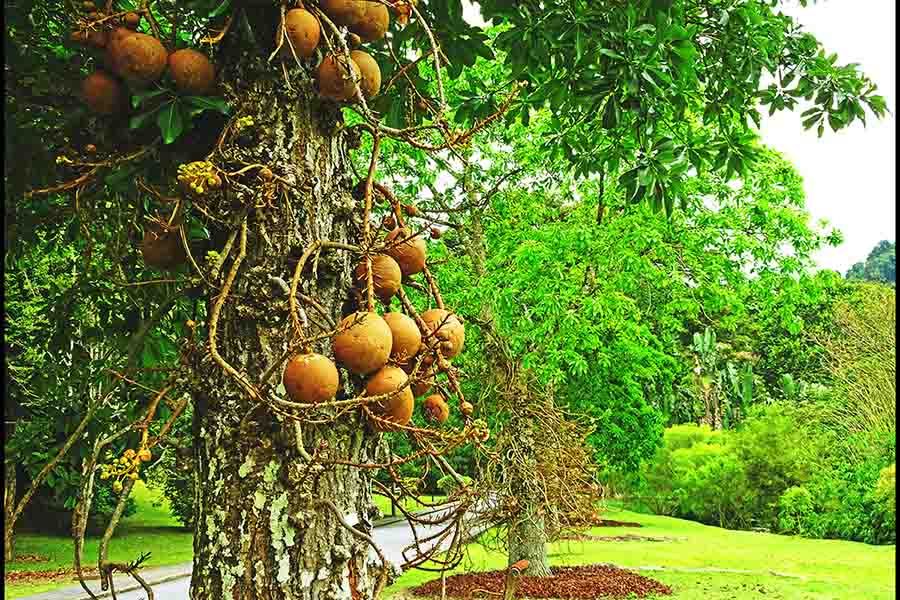
The garden is home to some of the world’s rarest and most fascinating plants. Particularly noteworthy are the Double Coconut Tree (Lodoicea), a unique specimen of extraordinary beauty, as well as the Cannonball Tree (Couroupita guianensis), whose distinctive red flowers look like they’ve come straight from a fairy tale.
An Oasis of Peace Today
Today, the Peradeniya Botanical Garden is a haven for locals and visitors alike. It’s common to see Sri Lankan families and engaged couples enjoying a peaceful day among flowers and ancient trees. For this reason, the garden is open 365 days a year, from 6 a.m. to 6 p.m., inviting everyone to discover the natural beauty that has captivated generations of visitors.
Visitors' opinions
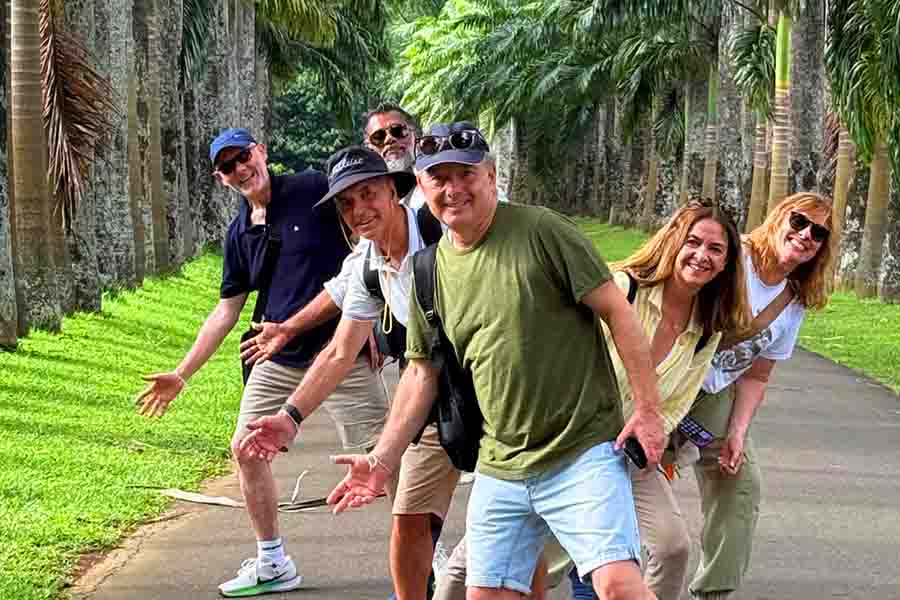
I wanted to tell you that the Peradeniya Botanical Garden can be considered one of the best in the world. We are passionate about botany and have already visited several countries. When we visited, we were truly amazed. I can tell you that it’s far superior to the one in Rio de Janeiro, on par with the kyiv Gardens in London, Berlin, and Johannesburg. Compared to others, it’s light years ahead, like the Royal Botanical Gardens in Madrid, Buenos Aires, or Quito. Compared to others that have developed a strong tourism industry, like Costa Rica, I regret that Sri Lanka doesn’t know how to properly promote itself, like Guatemala. Greetings.