

Matale Hindu Temple (Sri Muthumariamman Thevasthanam): Complete Visitor Guide
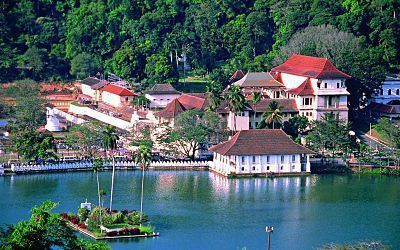
Matale Hindu Temple, officially consecrated as Sri Muthumariamman Thevasthanam, is one of the most revered and visually striking Hindu sanctuaries in Sri Lanka. Situated in the bustling highland town of Matale—just 25 kilometers north of Kandy along the primary route to Dambulla and Sigiriya—this sacred complex draws both Hindu devotees and international travelers captivated by Dravidian architecture and vibrant cultural rituals.
Dedicated to Goddess Mariamman (an incarnation of Goddess Parvati and revered as the protector against illnesses, fertility patron, and bringer of rain), the temple traces its roots back to the 1850s when South Indian estate workers and Chettiar merchant guilds established a shrine on the site. Today, Matale Hindu Temple stands as a landmark of multi-ethnic harmony, featuring Sri Lanka’s tallest and most elaborate temple tower (Raja Gopuram), richly embellished with over a thousand polychrome Hindu deities.
The Architectural Marvel: The 108-Foot Raja Gopuram
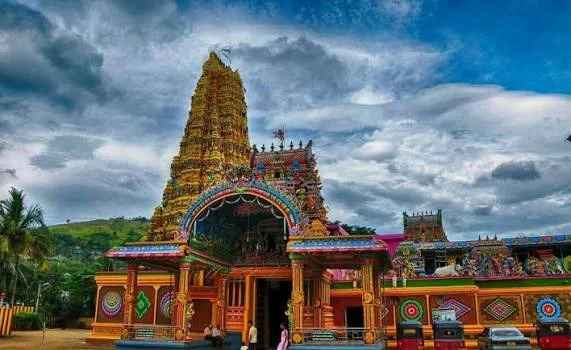
The defining exterior feature of Matale Hindu Temple is its monumental northern gateway tower (Raja Gopuram), completed in 2007. Towering 108 feet above the streetscape, the structure was crafted by master sculptors and sthapathis brought directly from Tamil Nadu, South India. The multi-tiered pyramid depicts 1,008 hand-sculpted mythological figures, avatars of Lord Shiva, Vishnu, and Goddess Mariamman, finished in vibrant colors that catch the morning mountain sunlight.
Architectural & Spiritual Highlights of the Temple
Walking through the carved brass-studded gateway of Matale Hindu Temple reveals an expansive pillared sanctuary rich in scent, sound, and devotional artistry:
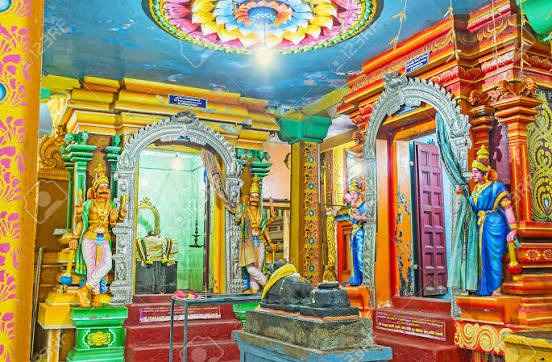
- The Moolasthanam (Inner Sanctum): The innermost sanctum enshrines the revered granite deity of Goddess Muthumariamman, adorned in silk sarees, fresh jasmine garlands, and gold ornaments. Devotees offer coconuts, fresh fruit, and flowers seeking health and prosperity.
- Intricately Painted Mandapams: The interior ceilings are adorned with kaleidoscopic geometric yantras, celestial wheel motifs, and narrative frescoes illustrating epic scenes from the Ramayana and Mahabharata.
- Subsidiary Shrines: Surrounding the main shrine are dedicated chambers for Lord Ganesha (the remover of obstacles), Lord Murugan (Kartikeya) with his consorts Valli and Deivayanai, Lord Shiva, and the Navagrahas (nine planetary deities).
- Carved Granite Colonnades: Massive monolithic granite pillars line the circumambulatory path (Prakaram), carved with motifs of sacred bulls (Nandi), swans, and celestial dancers.
Daily Puja Timetable & Ceremonial Rituals
Experiencing Matale Hindu Temple during an active puja (worship ceremony) offers an immersive look into traditional Hindu rituals accompanied by the resonance of Nadaswaram oboes and Thavil drums:
| Daily Ceremony | Time Schedule | Ritual Highlights & Experience |
|---|---|---|
| Morning Puja (Usha Kaalam) | 7:00 AM – 8:00 AM | The morning opening ritual with milk abhishekam (sacred bathing of deities), chanting of Vedic mantras, and lighting of camphor flames. A serene and reflective time to visit. |
| Noon Puja (Uchikalam) | 12:00 PM – 1:00 PM | The midday offering ritual featuring elaborate food offerings (Naivedyam) and the distribution of holy ash (Vibhuti) and vermillion (Kumkum) prasadam to devotees. |
| Evening Puja (Sayaratchai) | 6:30 PM – 7:45 PM | The most popular and vibrant ceremony of the day. The temple glows with bronze oil lamps, rhythmic drumming echoes throughout, and priests perform the multi-tiered Aarti flame ritual. |
The Grand Matale Chariot Festival (Masi Magam Theru)
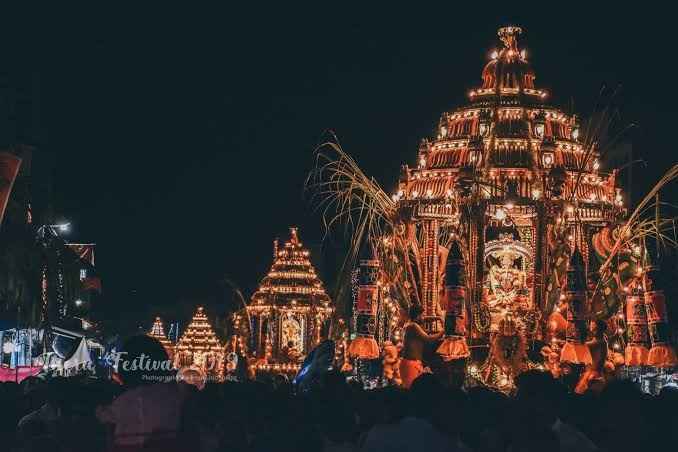
The annual highlight of Matale Hindu Temple is its celebrated Chariot Festival (Theru Thiruvizha), held across February and March. Spanning over three weeks of ceremonies, the grand climax sees five towering, intricately carved wooden chariots (Chithira Ther) hand-pulled through the streets of Matale by thousands of barefoot devotees.
- The Five Chariots: The procession honors Lord Ganesha, Lord Murugan, Goddess Muthumariamman, Lord Shiva, and Lord Chandeshwara, each riding an ornate, floral-draped wooden chariot.
- Cultural Harmony: The festival draws tens of thousands of pilgrims from Tamil, Sinhala, and Muslim communities across the Central Province, making it a vivid celebration of shared heritage and unity.
Visitor Etiquette & Practical Tips for Matale Kovil
- Modest Attire: Shoulders and knees must remain covered. Light cotton attire is recommended. Men are customarily requested to remove upper garments (shirts/vests) before entering the innermost sanctum.
- Footwear Storage: Remove shoes, sandals, and headwear before entering. A secure footwear storage stall is located beside the main entrance (a small gratuity of 50–100 LKR is customary).
- Photography Etiquette: Photography is generally allowed within outer corridors and exterior courtyards; however, photographing the sacred deities inside the inner sanctum is strictly prohibited.
- Ideal Stopover Location: Located directly on the Kandy-Jaffna Highway (A9), the temple serves as an ideal 45-minute cultural stopover between Kandy and the spice gardens of Matale, Nalanda Gedige, or Sigiriya Rock Fortress.
Explore Matale’s Cultural Heritage with Sri Lanka Eden Travels
Incorporate a private guided stop at Matale Hindu Temple into your Central Province journey with Sri Lanka Eden Travels. Our chauffeured tours connect Kandy, Matale, and the Cultural Triangle smoothly, accompanied by knowledgeable guides who unpack the art, rituals, and mythology behind every shrine.