

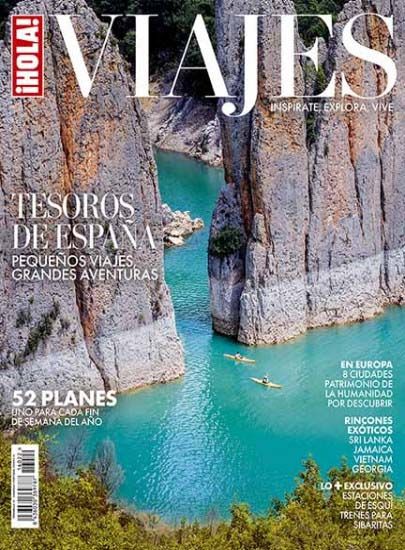
“This article was published in the Spanish travel magazine Viajes Magazine.”
THE TREASURE OF THE INDIAN OCEAN YET TO BE DISCOVERED
Aroma of cinnamon, sandalwood, mango, coconut, Ceylon tea, and moist earth. From the bright green of its mountain forests to the deep blue of the ocean… from the water lilies to the sapphires treasured around the world that grow from the depths of the earth… from the chants in the temples to the rumble of the elephants… from the soft touch of silk to the rough carved woods, and the flavors of its traditional cuisine, rich and full of spices—from curries to hoppers, kottu, and rotti.
Smell, sight, hearing, touch, and taste—Sri Lanka is the country where all the senses awaken… and the journey becomes a life-changing experience.
The island of a thousand names, called so for the many titles it has received throughout its history—shaped like a teardrop or a pearl and strategically located along the maritime routes of the Bay of Bengal, south of India—is a great treasure yet to be discovered. It is one of those rare corners of the world that still preserves its unique identity intact.
Its cultural diversity—today a true example of religious coexistence—its ancient history, and its lush nature are the great strengths of this radiant land, which has everything to captivate visitors: archaeological remains, buildings and cities from its colonial past (Portuguese, Dutch, and British), mystical mountains, surfing beaches, palaces, giant Buddhas, safaris, and a unique biodiversity, where seeing elephants, peacocks, monkeys, and huge lizards roaming freely is quite common…
But its true wealth lies in its people—always smiling and deeply hospitable.
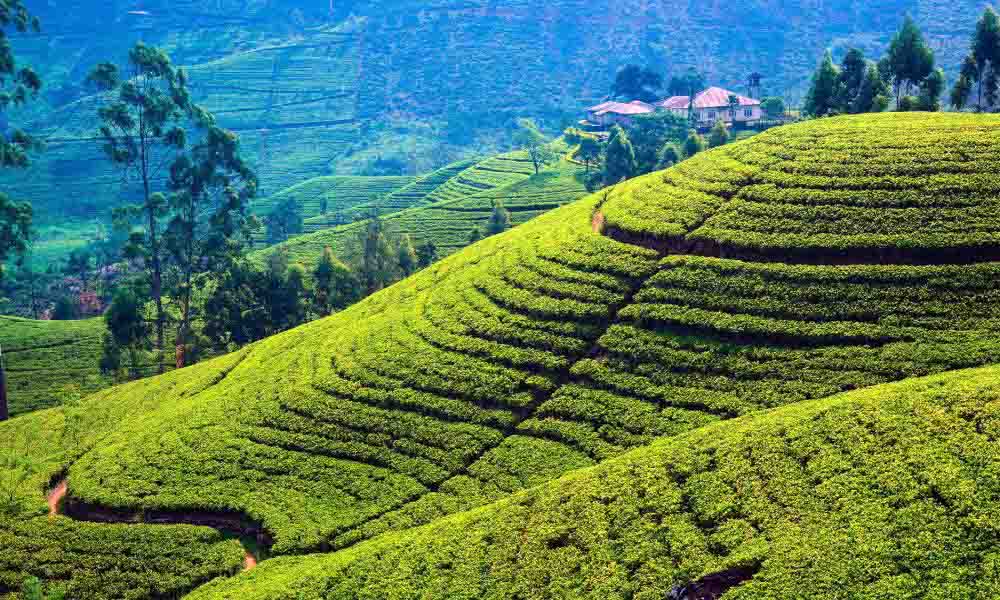
In its vast plantations, located in the highlands, a significant part of the world’s finest tea is produced.
Cities that still preserve the legacy of their colonial past (Portuguese, Dutch, and British), mystical mountains, surfing beaches, palaces, giant Buddhas, safaris, and a unique biodiversity—where seeing elephants, peacocks, monkeys, and enormous lizards roaming freely is completely normal… Yet the true wealth of the country is its people: always smiling and deeply hospitable.
“We love showing our country because we believe we live in the most beautiful country in the world,” says Sampath Ariyarathne, our guide during this unforgettable road trip.
Five of Sri Lanka’s eight UNESCO World Heritage Sites are found in the Cultural Triangle, in the heart of the country, whose corners are marked by ancient capitals with names that are hard to pronounce. Anuradhapura, about 200 kilometers north of Colombo, was the first—and one of the most important—cities of the Sinhalese civilization for more than a thousand years.
Today, it is one of the best-preserved archaeological sites in the world. But beyond its ancient temples and imposing stupas, such as Jetavanaramaya or Ruwanwelisaya, visiting the city means stepping into the spiritual soul of Sri Lanka, as it is a sacred place and one of the most revered sites in Buddhism.
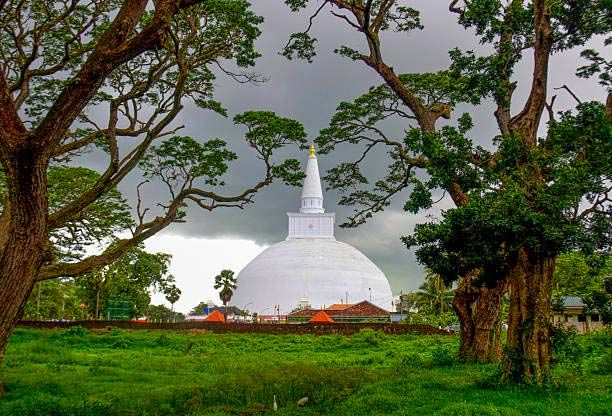
One of the impressive stupas of the ancient city of Anuradhapura.
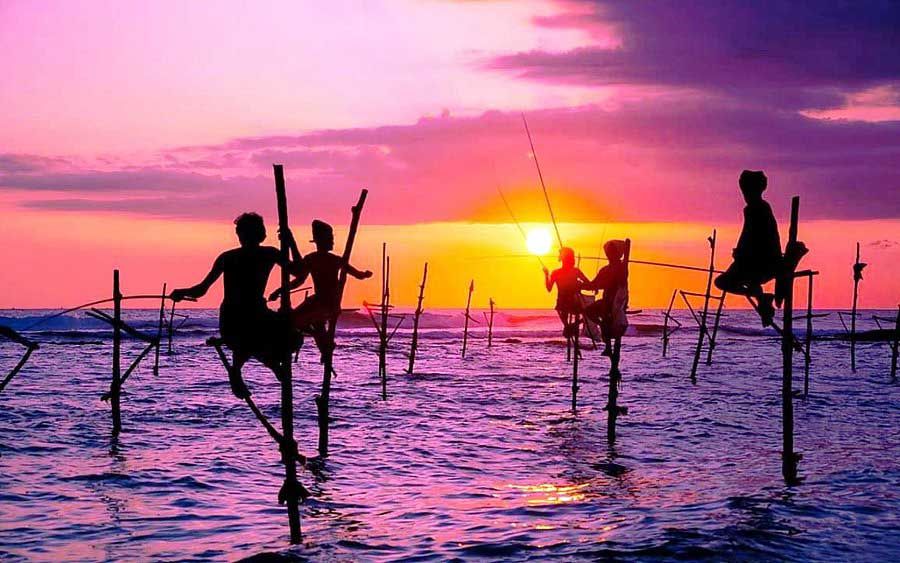
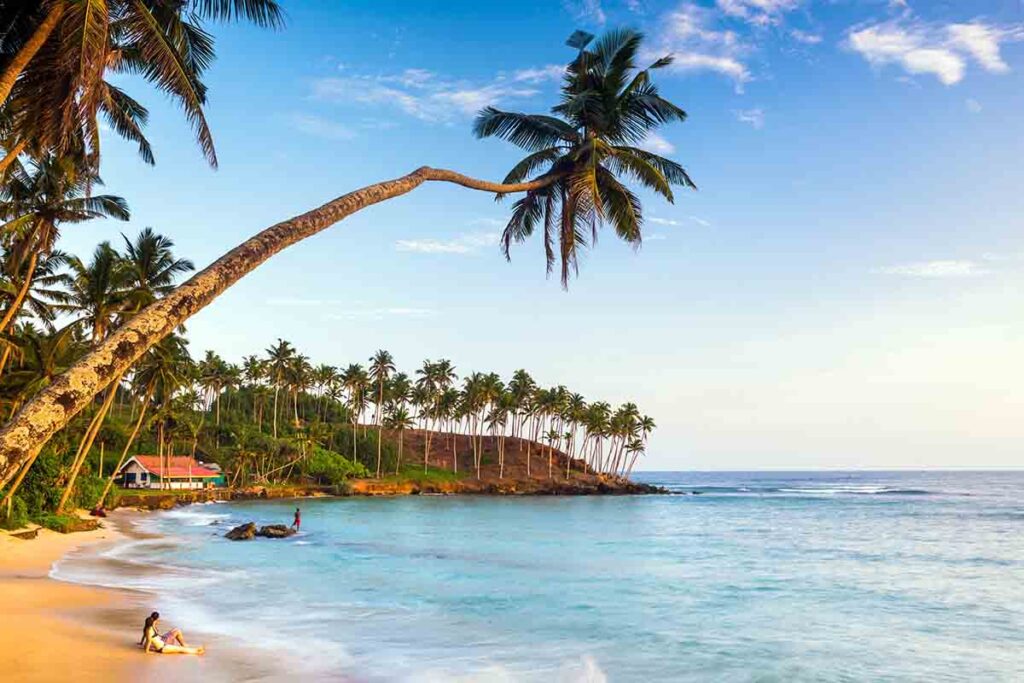
The stilt fishermen, an icon of Sri Lanka, can be seen on the beaches of Koggala, Weligama, Midigama, Ahangama, and Kataluwa (above).
IF I WERE YOU, I WOULDN'T MISS IT
- Take a sunset safari among the elephants of the Minneriya Sanctuary.
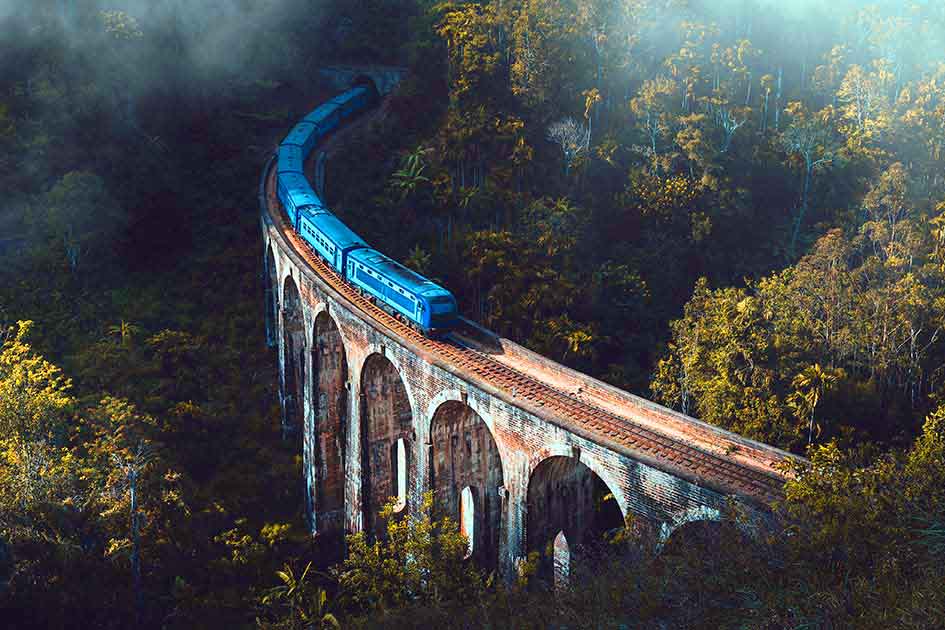
- Ride the winding highlands train from Nuwara Eliya to Ella—one of the most beautiful rail journeys on the planet.
- Treat yourself to an Ayurveda massage. Shirodhara, which pours a gentle stream of warm oil onto the forehead, is perfect for relieving stress.
- Don’t miss Yala National Park, home to the highest density of leopards in the world.
- Fly over tea fields and jungle in Ella—near the Little Adam’s Peak viewpoint—on a 500-meter zip line that crosses the valley.
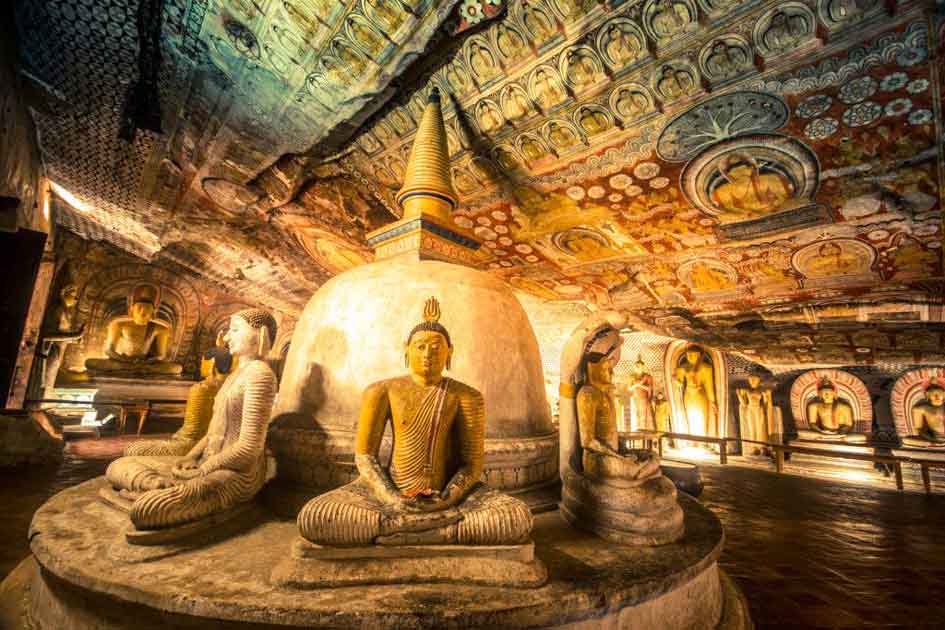
Sri Lanka, formerly known as Ceylon, has a long history of global prestige. The Dambulla Caves (Temple of Gold) in the Cultural Triangle of Sri Lanka are a testament to the rich history of the region.
The Minneriya National Park is one of Sri Lanka’s great elephant sanctuaries, where on a normal day you can see up to 200 elephants living together in their natural habitat.
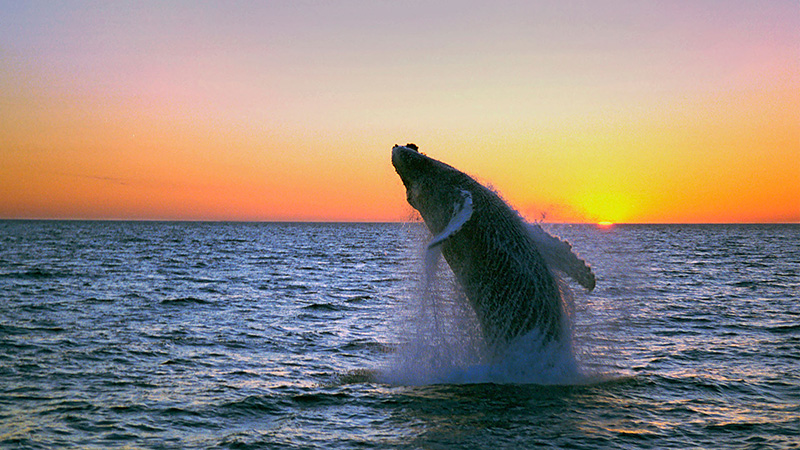
On the right, Mirissa Beach — known as one of the country’s main destinations for whale and dolphin watching.
Polonnaruwa replaced Anuradhapura as the capital and became the most important city in the country until 1236. In its extensive archaeological site — which requires several hours to explore — the highlights are the Gal Vihara sculptures: three enormous carvings of the Buddha in different postures, considered one of the highest expressions of Sinhalese art.
But if there is something that makes the country instantly recognizable, it is Sigiriya Rock, also known as the Lion Rock, rising from the jungle and standing majestically, defying vertigo. To visit the ancient citadel and the ruins of the palace where King Kasyapa sought to make himself unreachable in the 5th century, you must conquer the 1,200 steps that climb to the summit. The views are worth every effort.
I think what travelers generally love is that it is a country with the perfect combination of nature, history, culture, adventure, beaches, and a diversity of ethnicities and religions.
SIGIRIYA OR LION ROCK, RISING MAJESTICALLY ABOVE THE JUNGLE, IS THE SYMBOL OF SRI LANKA
It is a small country, and within a very short distance you can find all kinds of tourist attractions. For example, on the same day, you could watch whales in Mirissa in the morning and see leopards or elephants in Yala in the afternoon. Diversity is what defines Sri Lanka. Regarding Spanish travelers, I think that besides the nature, they are very attracted by the fact that tourism is still limited, says Ana Díaz, a Spanish co-founder—together with her Sri Lankan husband, Nalin Sanjeewa—of Sri Lanka Viajes Edén, a local agency specializing in tailor-made private tours across the country.
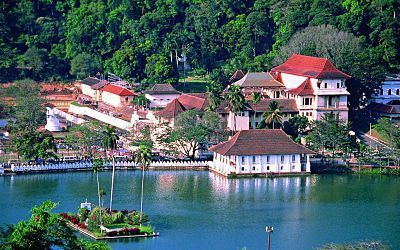
We visited the impressive caves and the Golden Temple of Dambulla, before traveling to the Temple of the Tooth in Kandy, the mountain capital, which houses one of Buddhism’s most important relics and attracts thousands of visitors. The Peradeniya Botanical Garden is a must-see stop, just six kilometers away.
The city, known as Little England, preserves the memory of its British past. The old post office, a country house used as a mountain club, its golf course, the racecourse, Gregory Lake… More colonial history awaits in Galle, in the southwest of the country, with its UNESCO-listed fort as the centerpiece. It is one of the must-see attractions in that coastal area, filled with spectacular surfing beaches like Mirissa and Weligama, opportunities to learn about turtle conservation, or to take a safari on Koggala Lake, after having spotted—if lucky—leopards in Yala National Park during the previous stage of our route.
The journey takes us back to Colombo, the capital and the most populated city. We return to our starting point, although we are no longer the same.
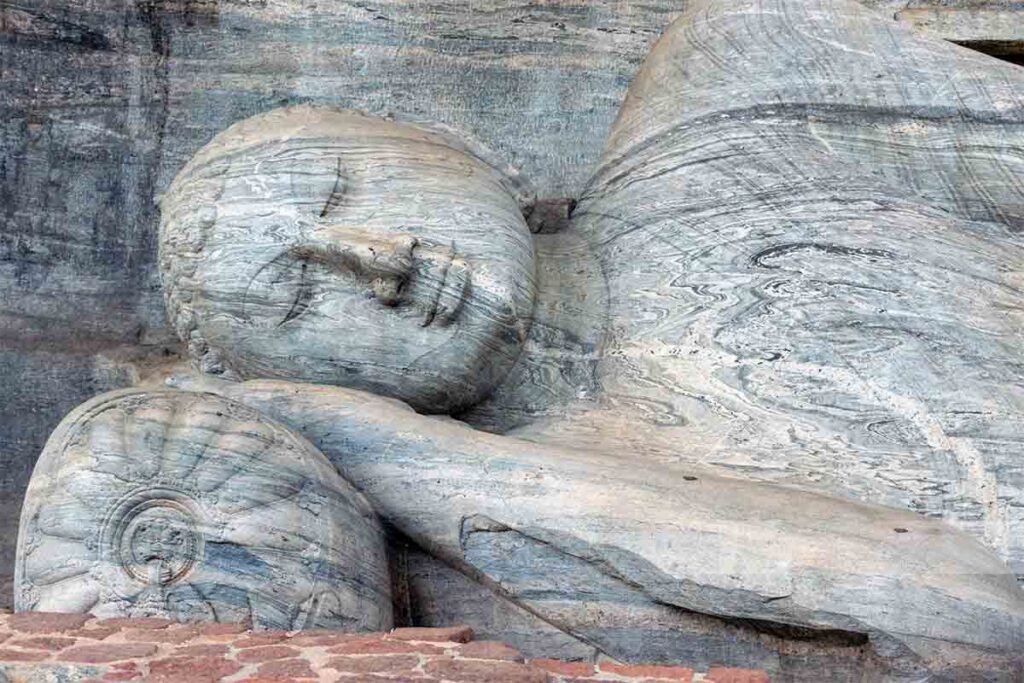
The greatness of an advanced and refined civilization is evident in the sculptures of the three impressive Buddhas of Gal Vihara in Polonnaruwa, which stand as a tribute to humanity. The reclining figure, over 15 meters tall, is carved in stone with such delicate precision that it evokes a profound silence.
HOW TO GET THERE AND GET AROUND
There are no direct flights from Spain to Colombo, the capital of Sri Lanka, but there are many connecting options with Iberia and other airlines from Madrid or Barcelona.
Other companies also operate flights with one stopover, with prices starting from around €600, depending on the season. To travel around the country, we recommend a private tour, such as those organized by the local agency Sri Lanka Viajes Edén.
Sri Lanka Viajes Edén specializes in customized tours in Spanish. These allow you to visit the best of the island with activities that children will also enjoy, such as safaris or boat rides. Prices start at around €1,800 for an eight-day trip in high-category hotels, excluding the international flight.
For short distances, tuk-tuks are very popular, but you can also use buses and trains.
WHEN TO GO
Sri Lanka has a tropical climate, which makes it a destination that can be visited year-round. The sun shines most of the time, despite the rains at certain periods. However, due to the two monsoons that affect different areas of the country differently, it is important to clearly define the places you want to visit.
WHERE TO STAY
The country has a hotel network capable of meeting the needs of all types of travelers. High-category hotels offer excellent value for money, such as:
Cinnamon Lodge Habarana (cinnamonhotels.com) in the center of the Cultural Triangle
The Golden Ridge (thegoldenridge.com) in Nuwara Eliya
Wild Culture (wildcultureyala.com) in Yala
WHERE TO EAT
Sri Lankan cuisine is rich and spicy, with rice and curries as the star dishes. At Ministry of Crabs (ministryofcrabs.com) in Colombo, you can enjoy seafood with a very special spicy touch. At Royal Bar (royalbarandhotel.com) in Kandy, you’ll find an excellent atmosphere in an impressive colonial building. The Chill (cafechilk) in Ella combines traditional dishes with new creations. And Piumali in Polonnaruwa lets you discover traditional recipes in a charming rural setting.