

The Bundala National Park: Sri Lanka's Premier Wetland Bird Sanctuary
The Bundala National Park, nestled along the southern coastline near Hambantota, is an internationally celebrated ecological haven renowned as Sri Lanka's supreme destination for bird watchers. Covering 6,216 hectares of interconnected coastal lagoons, salt pans, scrublands, and sand dunes, the Bundala National Park holds the historic distinction of being declared Sri Lanka’s first wetland of international importance under the Ramsar Convention in 1990.
Recognized as an official UNESCO Biosphere Reserve, the Bundala National Park serves as the critical final terminus for millions of migratory birds navigating the Central Asian Flyway. Unlike crowded wildlife reserves, embarking on a 4x4 safari through the Bundala National Park offers a tranquil and intimate safari experience, combining encounters with wild Asian elephants and marsh crocodiles alongside hundreds of rare wetland avian species.
Ecological Marvel: Why the Bundala National Park Is Globally Protected
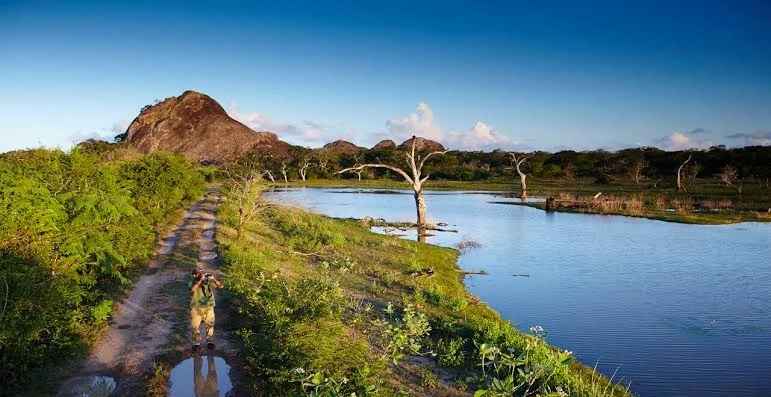
The unique biodiversity of the Bundala National Park is anchored around five shallow, brackish lagoons: Bundala, Embilikala, Malala, Koholankala, and Mahalewaya. These mineral-rich water bodies support abundant plankton and brine shrimp, making them an essential feeding station for migratory birds. In 2005, UNESCO designated the Bundala National Park as a Biosphere Reserve, recognizing its crucial role in sheltering endangered aquatic fauna, endemic flora, and breeding sea turtles.
Top Wildlife Highlights in the Bundala National Park
While celebrated globally for ornithology, the Bundala National Park protects a diverse mosaic of coastal and terrestrial wildlife:
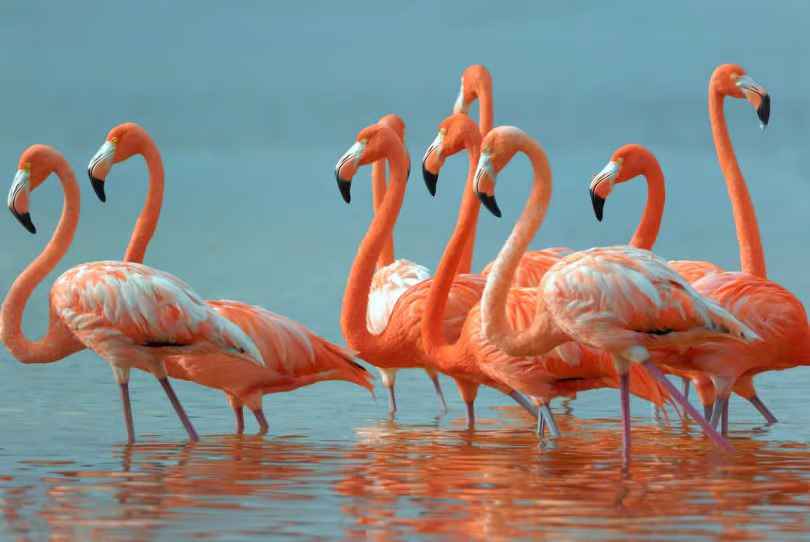
- Spectacular Flocks of Greater Flamingos: During peak migratory months, thousands of greater flamingos congregate across the shallow waters of the Bundala National Park, transforming the lagoons into a striking expanse of shimmering pink.
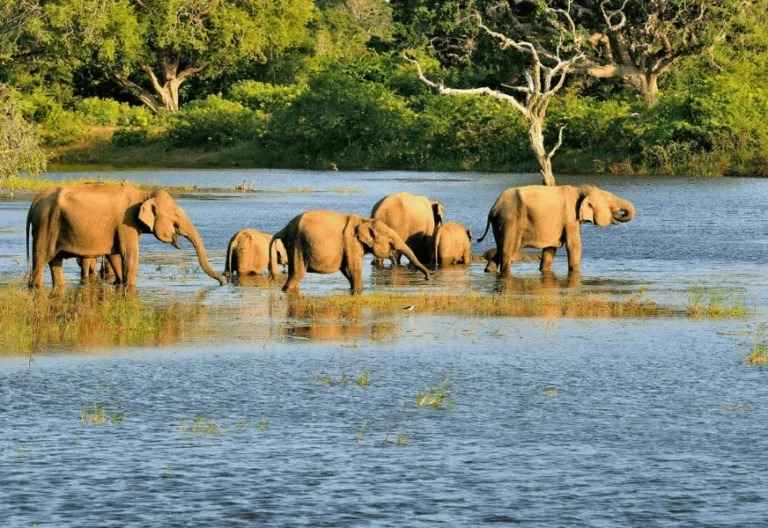
- Resident Asian Elephant Herds: A small, resident population of roughly 30 to 60 wild Asian elephants inhabits the scrub forests of the Bundala National Park, frequently seen bathing and grazing near waterhole banks during late afternoons.
- Dual Crocodile Populations: Bundala is one of the few reserves where visitors can observe both the freshwater Mugger crocodile and the formidable Saltwater (estuarine) crocodile cohabiting along the lagoon marshes and estuaries.
- Diverse Avian Species: The park records over 197 bird species, including the painted stork, spot-billed pelican, black-necked stork, Eurasian spoonbill, and migratory waders like sandpipers, plovers, and terns.
- Marine Turtle Nesting Coastline: The undisturbed golden beaches bordering the Bundala National Park provide essential nesting habitats for four of the world’s seven sea turtle species: the Olive Ridley, Green, Leatherback, and Loggerhead turtles.
The Bundala National Park: Safari Planning & Best Seasons
| Safari Season | Months | Wildlife Experience |
|---|---|---|
| Peak Bird Migration Season | September – March | Highest concentration of migratory flamingos, pelicans, and Eurasian waders feeding in the Bundala National Park. |
| Resident Wildlife Safari | April – August | Ideal for spotting resident elephants, crocodiles, spotted deer, monitor lizards, and dry-zone raptors without crowds. |
| Daily Safari Timings | 6:00 AM & 3:00 PM | Morning safaris (6:00 AM – 9:30 AM) offer the best lighting for bird photography and active feeding routines. |
Visitor Guidelines & Safari Tips for Bundala
- Bring Binoculars & Telephoto Lenses: Because birds often feed along the center of broad lagoons, bringing a good pair of binoculars or a 300mm+ camera lens is essential for the best experience in the Bundala National Park.
- 4x4 Safari Jeep Booking: All visitors must enter via authorized 4x4 safari jeeps accompanied by a Department of Wildlife Conservation (DWC) tracker or licensed safari driver.
- Protect the Biosphere: Maintain silence around feeding flocks, do not step outside the safari vehicle except at designated viewpoints, and strictly refrain from littering.
- Convenient Location: Situated right off the southern expressway, Bundala is only 20 minutes from Hambantota, 45 minutes from Yala National Park, and 1.5 hours from Tangalle, making it an effortless addition to southern wildlife circuits.
Experience the Bundala National Park with Sri Lanka Eden Travels
Uncover the tranquil birdlife and wild beauty of the Bundala National Park with Sri Lanka Eden Travels. Our curated wildlife journeys include private transfers, expert safari jeeps, and knowledgeable naturalist chauffeurs ensuring you witness the very best of Sri Lanka's southern wetlands.