

Udawalawe National Park: The Ultimate Wild Elephant Safari & Travel Guide
Spanning 30,821 hectares (308 square kilometers) across the boundary of the Sabaragamuwa and Uva Provinces, Udawalawe National Park is Sri Lanka’s premier elephant wilderness. Established in 1972 around the massive Udawalawe Reservoir on the Walawe River, this protected sanctuary was expressly created to offer a secure haven for wildlife displaced by the construction of the dam and safeguard its vital catchment basin.
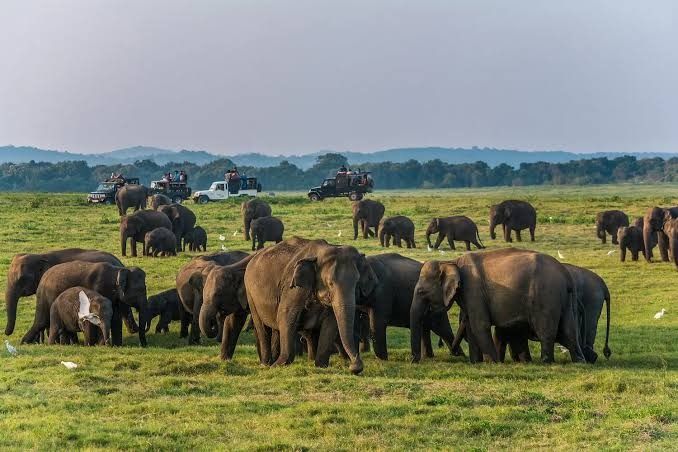
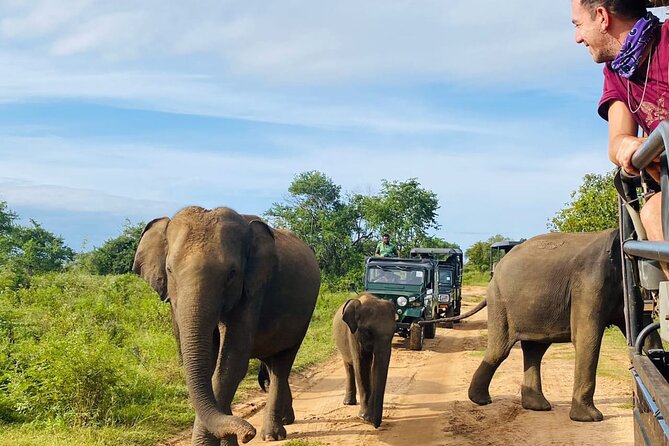
Often compared to the expansive savannas of East Africa, Udawalawe’s open terrain consists of rolling grasslands, thorny scrub jungle, abandoned teak groves, and riverine woodlands framed by the dramatic southern escarpment of the central mountains. Because of its unobstructed visibility and thriving water sources, Udawalawe offers an unmatched near-guarantee of encountering wild Asian elephant herds in their natural element year-round.
History & Landscape: Nature Born from Conservation
Before the dam project in the late 1960s, this fertile basin was heavily forested with majestic hardwood timber. When the reservoir flooded the valley, hundreds of submerged tree trunks remained preserved in the waters—creating the iconic, ghost-like silhouette of dead tree skeletons that still pierce the lake's surface today, offering picturesque perches for cormorants, darters, and fish eagles.
Positioned on the boundary between Sri Lanka’s wet and dry ecological zones, Udawalawe benefits from an annual rainfall of around 1,500 mm. Its plains support vast expanses of Guinea grass and scrub that provide abundant year-round fodder, ensuring elephant herds thrive without needing to migrate outside the protected perimeter.
Ethical Conservation: Udawalawe Elephant Transit Home (ETH)
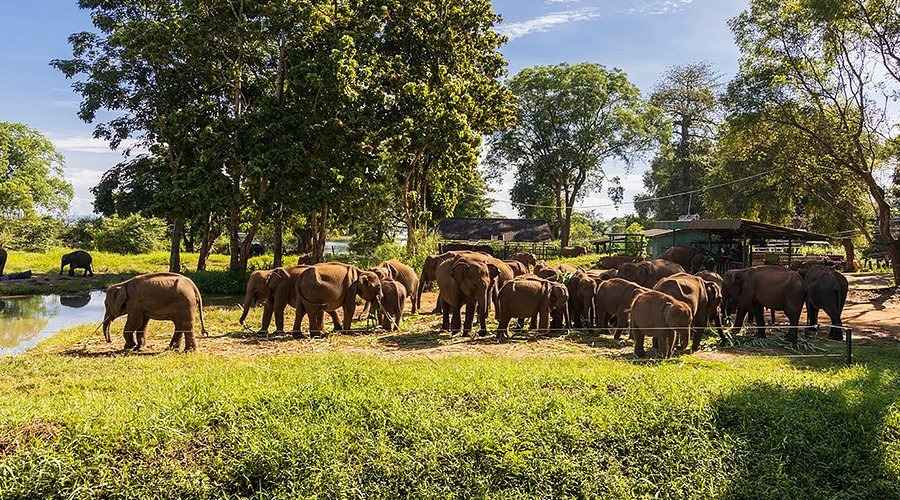
Located on the western boundary of the park, the Elephant Transit Home (Ath Athuru Sevana) was established in 1995 by the Department of Wildlife Conservation (DWC) with a pioneering hands-off rehabilitation model. Unlike commercial captivity attractions, orphaned and injured wild baby elephants are nurtured, fed warm milk formula, and closely monitored until they are strong enough to be radio-collared and reintroduced back into wild herds.
Visitors can observe the adorable calves running enthusiastically for their milk feedings from a dedicated viewing deck at fixed feeding intervals daily: 9:00 AM, 12:00 PM, 3:00 PM, and 6:00 PM. No touching, bathing, or riding is allowed, preserving their natural wild instincts.
The Wildlife Spectrum: Beyond the Giants
While the resident elephant population steals the spotlight, Udawalawe is a biodiverse haven hosting 43 mammal species, 33 reptiles, and 184 bird species:
- Asian Elephants (Elephas maximus maximus): A thriving resident population of 350 to 400 elephants roams the park. Visitors routinely witness intimate family dynamics: maternal herds shielding fragile newborns, playful juveniles splashing in muddy watering holes, and large tuskers grazing along the marshy lake shores.
- Water Buffaloes & Herbivores: Both wild water buffaloes and feral domestic herds wallow in muddy hollows, accompanied by herds of Spotted Deer (Axis axis), Sambar deer, Wild Boar, and Black-naped Hares.
- Predators & Elusive Hunters: While leopards (Panthera pardus kotiya) and Sloth Bears inhabit the park, they are shy and less frequently sighted than in Yala or Wilpattu. Golden Jackals, Jungle Cats, Fishing Cats, and Asian Palm Civets frequently cross the open tracks.
- Reptilian Residents: Massive Mugger Crocodiles bask along the reservoir banks and quiet inlets. Asian Water Monitors, Land Monitors, Indian Rock Pythons, and Indian Star Tortoises are common sights.
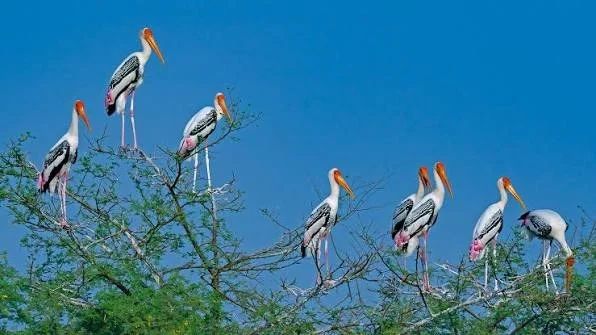
- A Raptorial & Wetland Bird Paradise: The park’s open skies make it one of Asia’s premier raptor watching hubs. Sightings include Crested Serpent Eagles, White-bellied Sea Eagles, Grey-headed Fish Eagles, and Changeable Hawk-Eagles, alongside flocks of Painted Storks, Spot-billed Pelicans, and endemic Sri Lanka Junglefowl.
Safari Timings & Daily Jeep Schedules
The park gates open from 6:00 AM to 6:00 PM daily. Matching your safari time to temperature changes maximizes animal activity:
| Safari Window | Operating Hours | Wildlife Activity & Highlights |
|---|---|---|
| Morning Safari (Peak Activity) | 6:00 AM – 9:30 AM | Cool morning breeze and active elephant herds moving toward drinking pools. Bird life and raptors are actively hunting across open grasslands. |
| Afternoon Safari (The Bathing Hour) | 2:30 PM – 6:00 PM | Prime time to witness large herds gathering around the reservoir edges for their evening bath and mud-coating ritual as the sun sets. |
| Full-Day Safari | 6:00 AM – 6:00 PM | Allows deep exploration into the park’s quiet northern sectors and extended hours around the reservoir, taking a midday picnic break at designated rest points. |
Best Time to Visit & Weather Patterns
Udawalawe is genuinely a year-round safari destination because elephants do not migrate out of the park. However, seasonal weather patterns influence water levels and vegetation density:
| Season | Calendar Months | What to Expect |
|---|---|---|
| Dry Season (Optimal Viewing) | May – September | Shrinking water pools force elephants and buffaloes to concentrate in massive numbers along the main reservoir shoreline, creating spectacular group sightings. |
| Inter-Monsoon / Shoulder Months | January – April | Sunny, bright skies with excellent overall visibility. Ideal for pairing Udawalawe with southern beach getaways or hill country journeys. |
| Wet Season (Lush & Green) | October – December | Occasional afternoon rains turn the grasslands lush emerald. Migratory birds arrive in large numbers, and waterholes fill up across the landscape. |
Udawalawe or Yala: Which Safari Should You Choose?
Travelers often wonder whether to visit Yala or Udawalawe. Choose Udawalawe if your dream is to see guaranteed wild elephants in relaxed, unhurried settings with far fewer jeep bottlenecks, or if you are traveling with families and young children. Choose Yala if your top priority is tracking the elusive Sri Lankan Leopard and Sloth Bear. For the ultimate wildlife itinerary, we recommend combining both!
Safari Permits & Practical Information
- Entrance Permits: DWC entry tickets are purchased at the park gate or online through the DWC portal. Foreign adult entry fees range around $25–$30 USD plus service charges, vehicle entry fees, and government taxes.
- Private Safari Jeeps: Specialized 4x4 safaris with elevated viewing seats cost roughly $35–$55 USD for half-day hire and $75–$110 USD for full-day hire (separate from entry fees).
- Ideal Location: Udawalawe is conveniently situated between the southern beach belt (Mirissa, Tangalle, Dikwella are just a 1.5-hour drive) and the central hills (Ella and Haputale are roughly 2 hours away), making it the perfect midway stopover.
- Strict Park Rules: Never feed animals (especially lone bulls near the boundary electric fence), remain inside your safari jeep at all times, and avoid loud noises. Single-use polythene is prohibited.
Experience Udawalawe Safaris with Eden Travels
From private 4x4 safari jeeps piloted by experienced wildlife drivers to seamless private transfers connecting Ella, Udawalawe, and the south coast beaches, Sri Lanka Eden Travels creates your dream wildlife adventure.