

Anuradhapura Sacred City: Ancient Capital, Stupas & Heritage Guide
Spanning over 40 square kilometers (16 square miles) across the sun-dappled plains of Sri Lanka’s North Central Province, Anuradhapura is the island’s first ancient royal capital and the cradle of Theravada Buddhism. Established in the 4th century BC by King Pandukabhaya, the city flourished uninterrupted for more than 1,300 years as one of the most stable, enduring centers of political power, monastic scholarship, and urban planning in South Asia.
Inscribed as a UNESCO World Heritage Site in 1982, Anuradhapura forms the apex of Sri Lanka's famed Cultural Triangle. Unlike purely ruined cities of the ancient world, Anuradhapura remains a living, breathing sanctuary where white-robed Buddhist pilgrims from across the globe gather daily to offer fragrant lotus blossoms, chant sacred stanzas, and light oil lamps before colossal brick stupas and the oldest living human-planted tree on Earth.
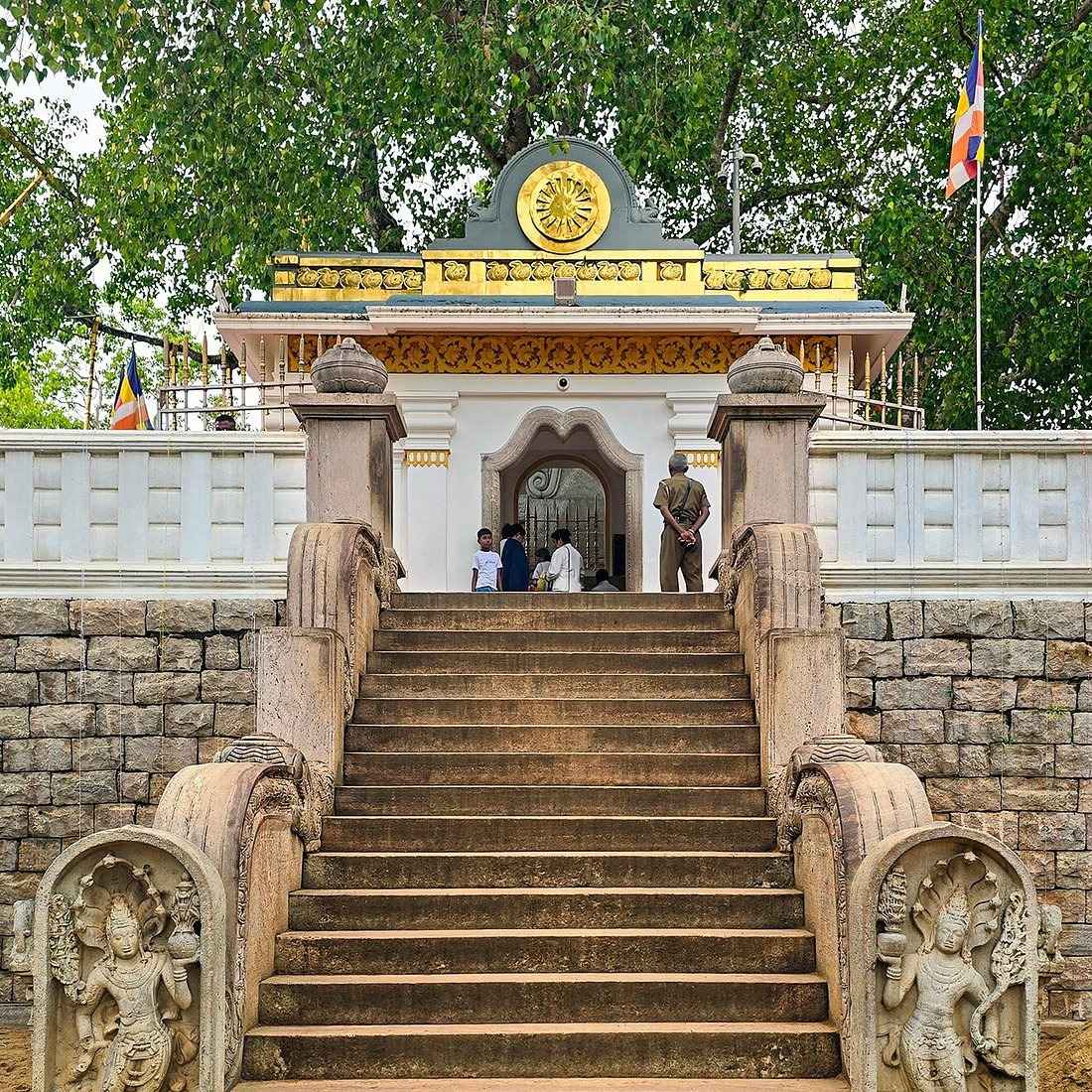
Jaya Sri Maha Bodhi: The Oldest Documented Tree in the World
Brought to Sri Lanka in the 3rd century BC by Sanghamitta Theri (the daughter of Emperor Ashoka of India), the Jaya Sri Maha Bodhi was grown from the sacred southern branch of the historical Bodhi tree in Bodh Gaya, under which Gautama Buddha attained supreme enlightenment. Planted in 249 BC by King Devanampiya Tissa in the Mahameghavana gardens, it has been guarded and tended continuously for over 2,250 years by dedicated guardians, making it the oldest historically authenticated living tree on Earth.
The 3 Great Monastic Sects of Ancient Anuradhapura
The vast ancient capital was architecturally organized around three monumental monastic university universities that drew scholars from China, India, and the Mediterranean:
- The Mahavihara (Great Monastery): Established in the 3rd century BC by King Devanampiya Tissa following the arrival of Arahat Mahinda. It served as the orthodox bastion of Theravada Buddhism, where the sacred Pali Canon was meticulously preserved and taught.
- The Abhayagiri Vihara: Founded in the 1st century BC by King Valagamba. Spanning over 500 acres, it grew into an international monastic center accommodating over 5,000 monks of both Theravada and Mahayana traditions, famously documented by the traveling Chinese monk Faxian in 412 AD.
- The Jetavanarama Monastery: Built in the 3rd century AD by King Mahasena, this rival monastery complex was crowned by the immense Jetavanarama stupa, representing an extraordinary milestone in ancient civil and structural engineering.
Iconic Landmarks Along the Sacred Pilgrimage Route
The ruins of Anuradhapura showcase an astonishing array of religious monuments, rock sculptures, and hydraulic wonders:
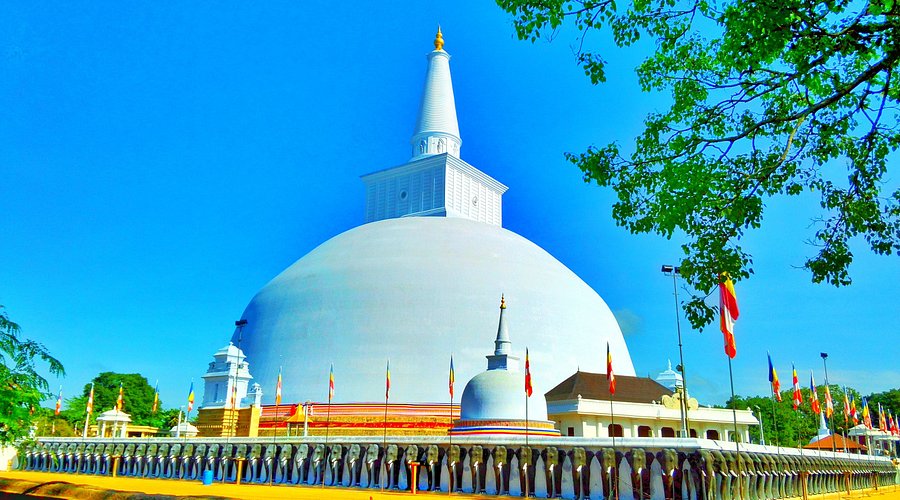
- Ruwanwelisaya (The Great Stupa / Mahathupa): Commissioned in 140 BC by the legendary King Dutugemunu, this brilliant white hemispherical dome stands 103 meters high with a circumference of 290 meters. Surrounded by a monumental outer wall sculpted with hundreds of elephant heads standing shoulder to shoulder, it enshrines the largest collection of Lord Buddha’s relics.
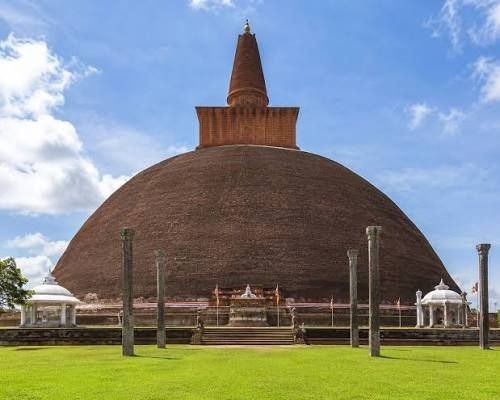
- Jetavanarama Dagoba: Constructed with an estimated 93.3 million baked clay bricks, Jetavanarama was originally 122 meters (400 feet) tall, making it the third tallest man-made structure in the ancient world, surpassed only by the Great Pyramids of Giza.
- Thuparama Dagoba: Built by King Devanampiya Tissa in the 3rd century BC, Thuparama is the first historical stupa built in Sri Lanka, constructed in the shape of a bell (Ghantakara) to enshrine the sacred collarbone relic of the Buddha.
- Lovamahapaya (The Brazen Palace): Once a towering nine-story monastic chapter house roofed with shimmering bronze tiles. Supported by a forest of 1,600 symmetrical granite pillars that still stand today, it originally contained 1,000 residential chambers for meditating monks.
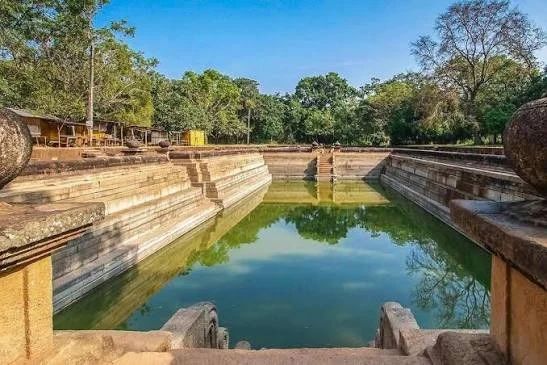
- Kuttam Pokuna (The Twin Ponds): Masterpieces of ancient Sinhalese hydraulic art and stone masonry, these dual ceremonial bathing pools feature sophisticated filtration chambers, underground conduits, and intricate Naga (cobra) guardian stones.
- Samadhi Buddha Statue: Carved from crystalline limestone in the 4th century AD within the Mahamevnawa Park, this world-renowned sculpture depicts the Buddha in the Dhyana Mudra (deep meditative absorption), praised by scholars and world leaders for its serene, transcendent grace.
Best Times to Explore the Sacred City
Anuradhapura sits in the dry zone where mid-day sunshine on stone pathways can become extremely warm. Planning your visit in two stages maximizes comfort and spiritual atmosphere:
| Exploration Window | Time Schedule | Atmosphere & Comfort |
|---|---|---|
| Early Morning (Cool & Serene) | 6:30 AM – 9:30 AM | Gentle morning sunlight, cool stone terraces, and active chanting ceremonies at Jaya Sri Maha Bodhi. Optimal conditions for cycling along quiet monastic forest paths. |
| Midday Break (Museum & Rest) | 11:00 AM – 3:00 PM | Granite stone paving around the stupas absorbs intense tropical heat. Ideal time to visit the indoor Anuradhapura Archaeological Museum or relax at your hotel. |
| Late Afternoon & Sunset (Magical Lighting) | 3:30 PM – 6:30 PM | The sun casts a golden glow across the stupas. As dusk falls, hundreds of oil lamps flicker around Ruwanwelisaya, creating an unforgettable spiritual ambiance. |
Best Season to Visit Anuradhapura
While the ancient city is a year-round cultural pilgrimage site, seasonal climate patterns guide overall touring comfort:
| Season | Calendar Months | Weather & Festival Dynamics |
|---|---|---|
| Dry Season (Optimal Touring) | January – September | Sunny, bright days with minimal rainfall. Excellent cycling weather along the great irrigation reservoirs (Basawakkulama, Tissa Wewa, Nuwara Wewa). |
| Poson Full Moon Poya (Sacred Festival) | June | The anniversary of Buddhism's introduction to Sri Lanka. Hundreds of thousands of white-clad devotees gather at Anuradhapura and nearby Mihintale rock peak. |
| Inter-Monsoon Season | October – December | Cooler temperatures with passing tropical afternoon showers. The ancient stone ruins are surrounded by lush emerald green grass and lotus-filled moats. |
Sacred City Etiquette & Practical Visitor Tips
- Modest White Attire: Wearing modest clothing that covers both shoulders and knees is mandatory at all sacred sites. Wearing white is traditional, appreciated by locals, and keeps you comfortable under the sun.
- Footwear & Hat Regulations: You must remove all shoes, sandals, and hats before entering the sacred sand courts (Sandamaluwa) and stone terraces of temples and stupas.
- Bring Thick Socks: Between 10:00 AM and 3:30 PM, the granite stone paving around stupas like Ruwanwelisaya and Thuparama can become scorching under the tropical sun. Carrying a pair of thick socks allows you to walk comfortably without burning your feet.
- Respecting Buddha Statues: Never pose for photographs with your back turned toward a Buddha statue. Always face toward or stand sideways to the image.
- Explore on Bicycles: Because the ancient city spans over 16 square miles with wide, tree-shaded paved paths, renting a bicycle or touring with a dedicated private air-conditioned vehicle is the most comfortable way to navigate between monastic sectors.
Archaeological Permits & Excursions
- Central Cultural Fund (CCF) Permits: Entrance tickets to the ancient monuments, museums, and archaeological complexes (including Abhayagiri, Jetavanarama, and Kuttam Pokuna) are obtained at the main CCF ticketing counter. Entry to active worship shrines like Jaya Sri Maha Bodhi and Ruwanwelisaya is managed separately.
- Combine with Mihintale: Located just 12 km east of Anuradhapura, the sacred rock mountain of Mihintale is the cradle where Buddhism was introduced to King Devanampiya Tissa in 247 BC. Climbing its 1,840 granite steps at sunset is an essential addition to any Anuradhapura itinerary.
Discover the Living Heritage of Anuradhapura with Eden Travels
From seamless private chauffeured transfers connecting Colombo, Sigiriya, and Kandy to curated private bicycle tours led by licensed archaeological guides, Sri Lanka Eden Travels crafts your bespoke Cultural Triangle pilgrimage tailored to your rhythm and comfort.