

Polonnaruwa Ancient City: Medieval Capital, Monuments & Travel Guide
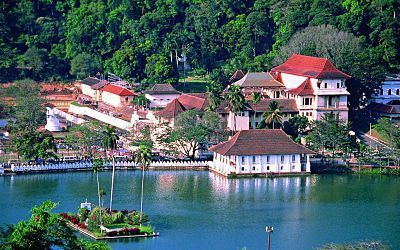
Rising to prominence following the decline of Anuradhapura, Polonnaruwa served as the thriving second ancient capital of Sri Lanka from the 11th to the 13th century. Recognized worldwide for its remarkably preserved architectural ruins, lush royal garden layouts, and colossal hydraulic engineering, the city stands as a monumental testament to medieval Sinhalese civilization and craftsmanship.
Inscribed as a UNESCO World Heritage Site in 1982, the archaeological park spans over 122 hectares of sacred shrines, majestic palaces, and monastic complexes. Polonnaruwa seamlessly blends classical Theravada Buddhist architecture with intricate South Indian Chola artistic influences, making it an indispensable jewel in Sri Lanka’s Cultural Triangle.
Parakrama Samudra: The Inland Sea of King Parakramabahu I
Commissioned by King Parakramabahu the Great (1153–1186 AD) under his famous vow that "not even a single drop of water from the rain should flow into the ocean without being made useful to man," the Parakrama Samudra (Sea of Parakrama) is an extraordinary artificial reservoir spanning over 2,500 hectares. Combining five interconnected reservoirs, this ancient hydraulic masterpiece continues to nourish vast rice fields and keeps the surrounding archaeological city cool and fertile.
Key Historical Zones of Ancient Polonnaruwa
Polonnaruwa was strategically laid out into specialized quarters of governance, veneration, and monastic scholarship:
- The Royal Palace Complex: The seat of secular governance, featuring King Parakramabahu’s once seven-story fortress palace (Vijayanta Prasada), the magnificent Royal Audience Hall with carved elephant friezes, and the royal Kumara Pokuna bathing baths.
- The Sacred Quadrangle (Dalada Maluwa): The sacred spiritual core of the capital, built upon a raised stone terrace to house the sacred Tooth Relic and collarbone relics of the Lord Buddha, showcasing some of the highest achievements in stone carving.
- The Northern Monastic Enclave: Stretching toward the northern perimeter, this leafy sanctuary houses monumental brick stupas, large image houses such as Lankatilaka and Tivanka, and the world-famed Gal Vihara rock monastery.
Iconic Monuments & Highlights to Explore
From monolithic rock sculptures to circular shrine houses, Polonnaruwa hosts some of the finest ancient craftsmanship in South Asia:
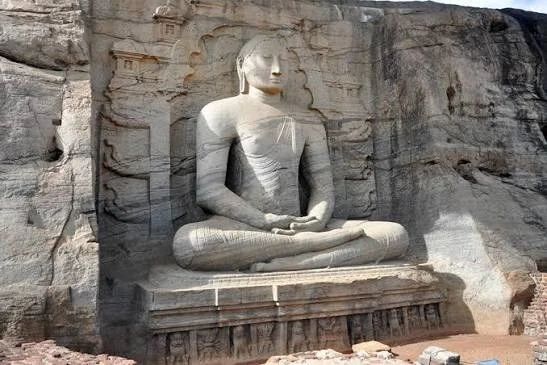
- Gal Vihara (Uttararama Rock Monastery): Carved out of a single large granite rock face, this 12th-century shrine features four distinct Buddha sculptures: a seated Buddha in deep Dhyana mudra, a seated image in a cave shrine, a 7-meter standing figure with crossed arms expressing compassion, and a colossal 14-meter reclining Buddha depicting the Mahaparinirvana (final passing away).
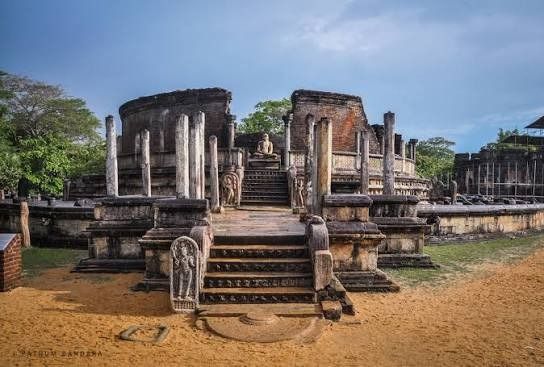
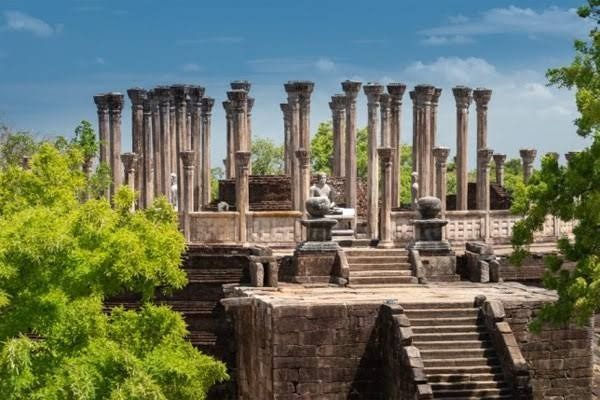
- The Polonnaruwa Vatadage: The crown jewel of the Sacred Quadrangle, this circular relic house is entered through exquisitely detailed moonstones (Sandakada Pahana) and stone guardstones (Muragala), protecting four seated Buddhas that face the cardinal directions around a central stupa.
- Rankot Vihara: Built by King Nissanka Malla, this monumental stupa rises to 54 meters (177 feet) with a diameter of nearly 170 meters, making it the fourth largest stupa in Sri Lanka and the largest in Polonnaruwa.
- Thuparama, Hatadage & Atadage: Surrounding the Quadrangle, the Atadage (built by King Vijayabahu I) and Hatadage (built by King Nissanka Malla) were ancient shrines for the Sacred Tooth Relic. The adjacent Thuparama is the only gedige-style brick structure in Polonnaruwa with its original roof fully intact.
- Satmahal Prasada: A stepped, seven-story stepped pyramidal tower located in the Quadrangle, displaying a rare architectural design reminiscent of ancient Southeast Asian architecture (particularly from Thailand and Cambodia).
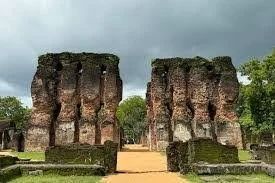
- The Royal Audience Hall (Raja Sabhawe): Located within the citadel, this three-tiered stone council chamber features finely sculpted stone pillars, roaring lion statues at the balustrades, and a frieze of uniquely carved elephants along its base.
Best Times to Tour the Ruins
Like Anuradhapura, Polonnaruwa lies within Sri Lanka's dry zone where open brick courts absorb heat by noon. Splitting your day ensures comfort and great photography:
| Exploration Window | Time Schedule | Atmosphere & Comfort |
|---|---|---|
| Morning Exploration (Cool & Quiet) | 7:30 AM – 10:30 AM | Pleasant breeze blowing across Parakrama Samudra. Shaded paths around the Quadrangle and Gal Vihara are quiet, offering ideal lighting for photography. |
| Midday Break (Museum & Lunch) | 11:30 AM – 2:30 PM | Sunlight warms stone pavements. Perfect time to explore the indoor Polonnaruwa Archaeological Museum near the lake bund and enjoy a traditional lunch. |
| Late Afternoon (Golden Hour) | 3:30 PM – 6:00 PM | Temperatures cool and a soft golden light bathes the massive brick face of Rankot Vihara and Lankatilaka. Great for leisurely cycling before park closure. |
Best Season to Visit Polonnaruwa
Polonnaruwa is accessible year-round, but seasonal weather trends can guide your itinerary planning:
| Season | Calendar Months | Weather & Travel Highlights |
|---|---|---|
| Dry Season (Prime Season) | January – September | Warm, sunny, and dry days with virtually no rain disruptions. Ideal conditions for cycling between ruins and combining tours with Minneriya elephant safaris. |
| Elephant Gathering Season | July – October | Combines seamlessly with Polonnaruwa trips: hundreds of wild elephants congregate at nearby Minneriya and Kaudulla National Parks right beside the city. |
| Inter-Monsoon Season | October – December | Occasional tropical showers keep the park lush, verdant, and cool. Stone structures look dramatic against deep green backdrops with fewer tourist crowds. |
Visitor Guidelines & Temple Etiquette
- Modest Clothing Required: Shoulders and knees must be fully covered at all religious monuments (such as the Vatadage and Gal Vihara). Light, breathable cotton or linen clothing in white or light colors is recommended.
- Footwear Removal: Shoes and hats must be removed before entering stone platforms around shrines and stupas. Carrying a pair of thick cotton socks helps protect your soles against warm stone slabs.
- Photography Manners: Never turn your back toward a Buddha statue to pose for a photo or selfie. Always stand sideways or face toward the shrine.
- Transportation Choices: The park covers 122 hectares. Exploring via rental bicycle along tree-shaded avenues is popular, or you can opt for an air-conditioned private vehicle to hop conveniently between distant sectors.
- Beware of Monkeys: Macaques and langurs roam freely across the ruins. Keep snacks, drinks, and plastic bags securely stowed inside your backpack.
Ticketing & Logistics Overview
- Opening Hours & Tickets: The archaeological site is open daily from 7:00 AM to 6:00 PM. Foreign visitor admission is approximately $25–$30 USD per adult, which includes entry to both the archaeological park and the central Archaeological Museum.
- Strategic Location: Polonnaruwa is situated roughly 55 km east of Sigiriya / Dambulla (around a 1-hour drive) and 220 km northeast of Colombo, making it an easy day-excursion from Sigiriya or an ideal overnight stopover.
Experience Medieval Sri Lanka with Sri Lanka Eden Travels
From tailor-made Cultural Triangle itineraries with private chauffeured transport to guided cycling tours alongside licensed archaeological storytellers, Sri Lanka Eden Travels ensures your journey through Polonnaruwa is seamless, authentic, and unforgettable.