

Unraveling Ravana’s Palace: Ella’s Caves, Waterfalls & Living Legends
Hidden beneath the jagged limestone peaks and rolling cloud forests of Ella lies one of Sri Lanka’s greatest archaeological enigmas: The legendary palace complex of King Ravana. Unlike traditional medieval castles built of brick and mortar on open plains, ancient lore describes Ravana’s empire as an interconnected subterranean labyrinth—a subterranean city guarded by vertical precipices, roaring waterfalls, and subterranean waterways.
For modern travelers visiting Ella, following the footprint of King Ravana is not just a lesson in Ramayana mythology; it is an active hiking and spelunking adventure through some of the most dramatic mountain terrain in the central highlands.
Myth or History? The Dual Identity of King Ravana
In South Asian literature, King Ravana is remembered through two distinctly different lenses:
- In the Sanskrit Ramayana: He is portrayed as the mighty ten-headed King of Lanka, whose abduction of Princess Sita triggered the epic war with Lord Rama.
- In Sri Lankan Folklore & Historical Chronicles: Ravana is revered as an extraordinary indigenous monarch of the ancient Yakka civilization—a master Ayurvedic physician, an accomplished musician, a profound scholar of astronomy, and an architectural genius who engineered fortified highland sanctuaries.
Rather than a single standing palace, local tradition holds that Ravana utilized Ella’s natural geological caves as hidden mountain residences and military vantage points.
Field Guide: Exploring the 4 Epic Ravana Sites in Ella
If you are basing yourself in Ella, here is how each site fits into the legendary narrative and how to experience it on the ground:
1. Ravana’s Cave (Ravana Guhawa)
The Legend: Believed to have served as a hidden royal refuge and one of the primary tunnels connecting the Ella highlands with the southern plains and ancient capital cities.
The Exploration Experience: Located about 2 km outside Ella, reaching the cave entrance requires climbing roughly 650 stone steps up a steep hillside woodland. The cave mouth opens into dark, cool stone chambers with passages fading into unmapped subterranean depths. It offers an incredible view across the valley below.
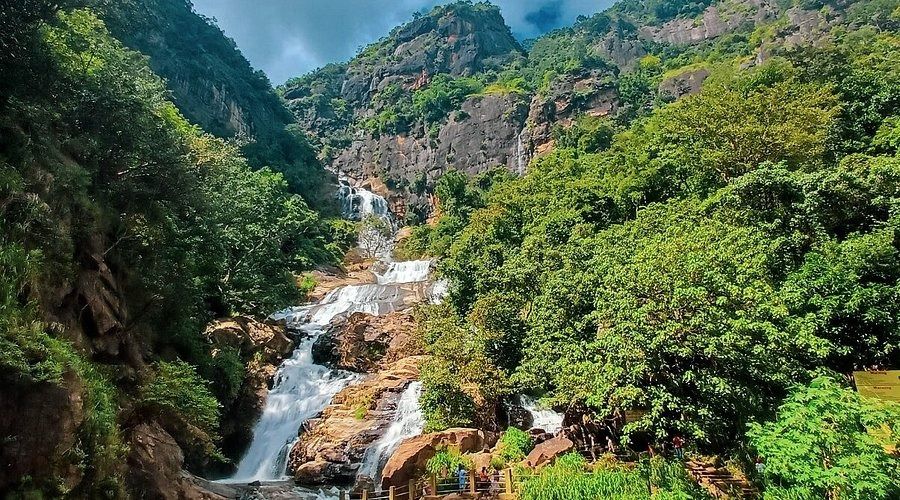
2. Ravana Falls (Ravana Ella)
The Legend: Known as the cascade where Princess Sita was said to have bathed during her stay in the highlands, with hidden cave recesses concealed behind the sheet of falling water.
The Exploration Experience: This 25-meter waterfall drops over tiered limestone ledges right beside the main Ella-Wellawaya mountain road. It is easily accessible by vehicle, making it a great spot for morning photography when mist rises from the pool base.
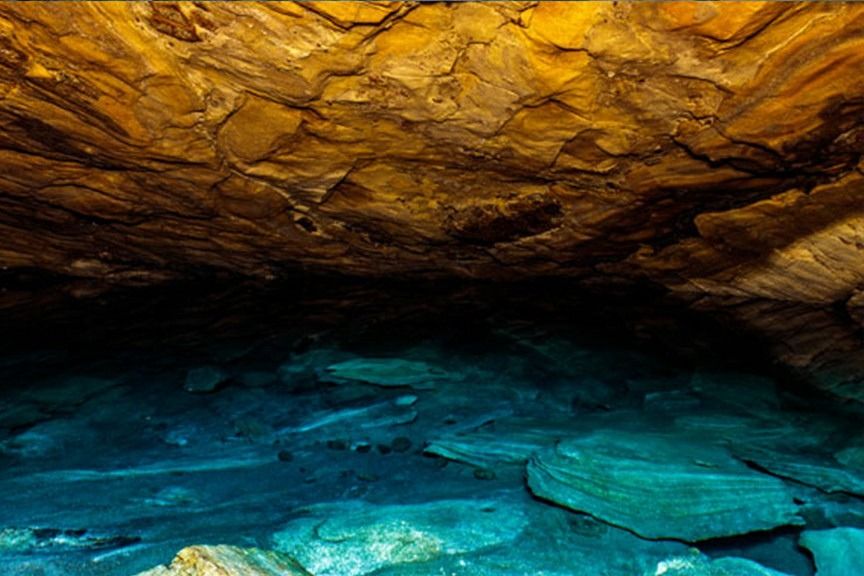
3. Nil Diya Pokuna (The Blue Water Cavern)
The Legend: Folklore claims this is an underground royal bathing pavilion that formed part of Ravana’s subterranean palace quarters.
The Exploration Experience: Tucked beneath a mountain near Karandagolla, this deep underground cave drops dozens of meters into the earth, ending at a crystalline subterranean pool of electric-blue water. Exploring Nil Diya Pokuna is a serious caving excursion requiring headlamps, ropes, and local guides.
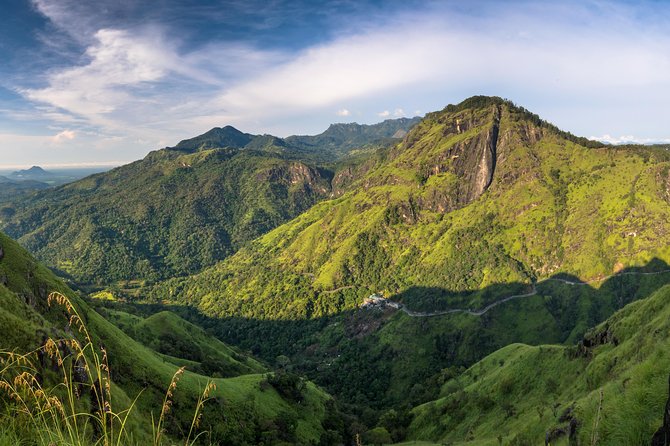
4. Ravana Rock & Ella Gap Viewpoint
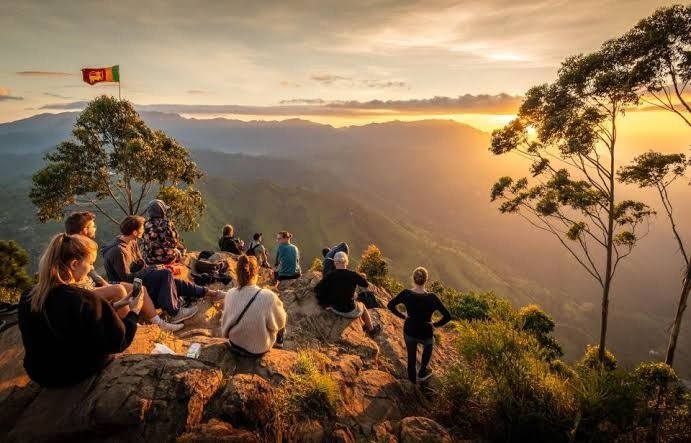
The Legend: The towering mountain ridge opposite Ella Rock is believed to have been Ravana’s primary watchtower, keeping vigil over foreign vessels arriving across the southern seas.
The Exploration Experience: One of Sri Lanka's finest mountain vistas. The sweeping natural cleavage in the mountains offers an unobstructed line of sight all the way to the southern coastline and the Great Basses lighthouse on clear mornings.
The Flying Peacock: Ancient Aviation Lore (Dandu Monara)
Perhaps the most fascinating aspect of Ravana’s legacy is the Dandu Monara—the ancient aircraft or flying chariot described in ancient texts. Folklore identifies several flat mountain plateaus across central Sri Lanka as ancient landing and takeoff runways:
- Weragantota (Mahiyanganaya): Meaning "a place of aircraft landing" in ancient Sinhala.
- Thotupola Kanda (Horton Plains): Meaning "the mountain port or landing ground."
- Gurulupotha: Ancient folklore identifies this site as Ravana’s royal aircraft maintenance hangar.
Comparing the Treks: Effort vs. Reward
Each Ravana landmark offers a distinct hiking profile. Use this practical summary to plan your day in Ella:
| Site | Trek Difficulty | Time Required & Essentials |
|---|---|---|
| Ravana Falls | Easy (Roadside) | 15–30 mins. Directly beside the main road; ideal for a quick scenic photo stop. |
| Ravana Cave | Moderate (Steep Steps) | 1.5–2 hrs return. Approx. 650 stone steps. Bring plenty of water and wear sneakers. |
| Nil Diya Pokuna | Challenging (Spelunking) | 3–4 hrs. Steep underground crawl on slick rocks. Requires an experienced local guide and headlamps. |
| Ella Rock & Ridge | Moderate to Hard | 3.5–4.5 hrs. Trail follows railway tracks before climbing through tea estates and eucalyptus woods. |
Practical Advice for Exploring Ella’s Mythological Sites
- Best Season for Caving & Hiking: Visit during the dry intervals from January to April and July to September. Heavy monsoonal rains make cave rocks slippery and increase subterranean water levels.
- Footwear: Closed-toe athletic shoes or trail running shoes with aggressive tread are essential for both Ravana’s Cave and Nil Diya Pokuna. Avoid flip-flops or open sandals.
- Combine with Ella Highlights: Ravana’s Cave and Falls are easily combined on a half-day circuit with the colonial Nine Arch Bridge and a hike up Little Adam’s Peak.
Design Your Ella Mountain Adventure with Eden Travels
Whether you want to discover the subterranean secrets of King Ravana’s trail, embark on guided mountain hikes, or relax in luxury boutique lodges overlooking the Ella Gap, Sri Lanka Eden Travels designs seamless, chauffeur-guided journeys crafted around your travel style.